

 Simple Definition
Custom software is software designed and built specifically for one business and no one else.
In practical terms, it means the software mirrors how your organization already works. Your workflows, approval chains, reporting formats, integrations, and team responsibilities are all carefully mapped during development.
Instead of forcing your team to adapt to rigid software, the system adapts to your business reality.
Because it is purpose built, custom software focuses only on what your organization truly needs. This leads to:
- Cleaner user interfaces
- Faster system performance
- Less employee training time
- Fewer operational workarounds
From a day to day operational perspective, custom software:
- Follows your exact workflow step by step
- Connects existing tools into one ecosystem
- Reduces manual entry and repetitive work
- Improves reporting accuracy
- Enhances team collaboration
Most importantly, custom software evolves with your business. Features can be added, workflows refined, and integrations expanded as your organization grows.
In simple terms, custom software becomes the digital backbone that grows alongside your company.
Real World Custom Software Solutions
Every organization operates differently. That’s why custom software is never built from a rigid template it is engineered around specific operational realities.
Below are real world examples demonstrating how tailored platforms can transform already digital environments into highly optimized ecosystems.
🔹 1. ERP Systems : Bringing Everything Together
What it does:
A custom ERP (Enterprise Resource Planning) system unifies finance, HR, operations, procurement, and reporting into one centralized environment.
Even digitally advanced Canadian companies often struggle with fragmented systems. A tailored ERP eliminates data silos and creates a single source of truth across the organization.
In Action Flowcite: Flowcite is a research management platform that organizes articles, citations, and collaborative workflows in one centralized space. It connects multiple research processes seamlessly functioning like a specialized ERP for research teams.
Business Impact:
- Reduces manual reconciliation work
- Minimizes data inconsistencies
- Improves cross team collaboration
- Enables scalable process management
- Strengthens reporting accuracy
🔹 2. CRM Solutions: Stronger Customer Relationships
What it does:
A custom CRM system manages leads, communications, follow ups, and customer intelligence based on how your sales and service teams actually operate.
Many Canadian companies already use CRM tools but find them either too generic or poorly integrated with internal workflows.
In Action: Merchaint
Merchaint is an AI powered platform that digitizes invoices and automatically structures customer data. By eliminating repetitive manual tasks, it allows teams to focus more on strategy, service, and revenue growth.
Business Impact:
- Faster customer response times
- Better lead visibility
- Increased sales productivity
- Improved customer retention
- More accurate forecasting
🔹 3. Inventory & Operations Management: Real Time Control
What it does:
Custom inventory and operations platforms provide real time visibility into stock, suppliers, logistics, and asset movement.
For businesses already running multiple systems, the key value is synchronization and real time intelligence.
In Action: CabGuard Pro+
CabGuard Pro+ supports driver and delivery operations by monitoring vehicle availability, managing logistics, and centralizing operational data in one smart platform.
Business Impact:
- Prevents costly stock and routing errors
- Improves fleet coordination
- Reduces operational waste
- Enhances delivery performance
- Enables data driven logistics decisions
🔹 4. Internal Dashboards: Clear Insights at a Glance
What it does:
Custom dashboards aggregate data from multiple systems and present it in clear, role based visual views.
For many Canadian organizations, the problem is not lack of data it is lack of actionable visibility.
Espace Infotech Custom Dashboard Solutions
We build dashboards that unify KPIs, operational metrics, and performance indicators into intuitive interfaces. Executives and managers can monitor business health in real time.
Business Impact:
- Faster executive decision making
- Real time performance monitoring
- Reduced reporting workload
- Improved strategic planning
- Better cross department transparency
🔹 5. Customer Portals : Empowering Your Clients
What it does:
Customer portals provide secure self service environments where users can manage accounts, track services, submit requests, and communicate with your team.
In digitally mature markets like Canada, self service expectations are extremely high.
In Action : HouZes
HouZes enables users to browse listings, track properties, and communicate directly with agents in one seamless experience.
Business Impact:
- Improved digital customer experience
- Reduced support workload
- Increased customer trust and retention
- Faster service delivery
- Scalable client management
 Why Custom Software Makes a Difference in Canada
In Canada, the need for custom software is rarely about basic digitization. Most organizations already operate in digital environments.
The real competitive advantage comes from:
- Eliminating inefficiencies between existing tools
- Creating deeper automation layers
- Improving real time data visibility
- Enhancing customer journey quality
- Enabling scalable, cloud native growth
Canadian consumers and business partners have high digital expectations. Slow systems, fragmented experiences, or manual heavy workflows quickly become competitive disadvantages.
Custom software allows companies to move from functional digital to strategically optimized digital.
Instead of struggling with tools that almost fit, businesses gain a technology environment engineered
H3: Who Needs Custom Software?
Custom software isn’t just for big companies and it’s not only for businesses that are beginning their digital journey. In highly advanced markets like Canada, most organizations are already digitally enabled. They use cloud tools, SaaS platforms, CRMs, ERPs, and mobile apps every day.
However, digital adoption does not always mean digital alignment.
Many Canadian businesses now face a different challenge:
- Their tools exist, but they don’t fully match their workflows
- Their systems are digital, but not fully integrated
- Their teams use multiple platforms that don’t communicate well
That’s why the demand for advanced custom software and mobile app development in Canada continues to grow. Companies are moving beyond basic digitization toward deep optimization, automation, and system unification. (Canadian Federation of Independent Business, 2022)
Here’s who typically sees the biggest impact:
1. Startups
Canadian startups operate in a highly competitive and innovation driven ecosystem. While there are many ready made tools available, startups often discover that off the shelf platforms either
- Include too many unnecessary features
- Limit product flexibility
- Restrict scalability or differentiation
Modern custom software projects for startups focus on building lean, scalable, and investor ready digital products.
Key focus areas:
- Building a minimum viable product (MVP) tailored to the startup’s unique value proposition
- Enabling rapid iteration based on real user feedback
- Creating scalable architecture that supports future growth
- Automating early stage operations to keep teams lean
- Developing custom mobile apps that deliver a differentiated user experience
Why it matters in Canada:
Canadian startups are rarely starting from zero digitally they’re competing in mature markets. Custom development helps them stand out, move faster, and avoid being boxed in by generic SaaS tools.
Startups validate ideas faster, attract investors more confidently, and scale without technical bottlenecks.
2. Small & Medium Businesses (SMBs)
Across Canada, SMBs are already using accounting software, CRMs, inventory tools, and cloud platforms. The real challenge isn’t lack of technology it’s fragmentation and inefficiency.
Many SMBs experience:
- Disconnected software ecosystems
- Manual data transfers between systems
- Duplicate data entry
- Limited reporting visibility
- Workflows that don’t match how their business actually operates
This is where advanced custom software projects deliver major value.
Typical SMB custom projects include:
- Workflow automation for inventory, logistics, or order management
- Custom dashboards combining data from multiple platforms
- API based integration between existing tools
- Industry specific mobile apps for staff or customers
- Process optimization systems that eliminate manual steps
Why it matters in Canada:
Canadian SMBs are under pressure to improve productivity and control costs. Hiring more staff is expensive so businesses increasingly invest in automation first custom solutions.
SMBs reduce operational friction, improve decision making speed, and scale efficiently without adding unnecessary overhead.
3. Enterprises
Large Canadian enterprises are among the most digitally mature organizations but they also face the highest level of system complexity.
Typical enterprise environments include:
- Multiple legacy systems
- Department specific software silos
- Complex compliance requirements
- Massive volumes of operational data
- Hybrid cloud and on premise infrastructure
Off the shelf platforms rarely address these complexities perfectly. Enterprises therefore invest heavily in advanced custom software and enterprise grade mobile apps.
Enterprise custom initiatives often include:
- Legacy system modernization and integration
- Enterprise data unification platforms
- Advanced KPI and business intelligence dashboards
- Workflow orchestration across departments
- AI enabled automation and predictive analytics
- Secure internal mobile apps for distributed workforces
Why it matters in Canada:
Enterprises are no longer digitizing they are optimizing and future proofing. Custom solutions help them eliminate inefficiencies that cost millions at scale.
Enterprises gain deeper operational visibility, stronger automation, improved compliance, and measurable cost savings.
4. Government & Non Profits
Canadian government agencies and nonprofit organizations are also highly digital but they operate under strict regulatory, security, and accessibility requirements.
While many ready made platforms exist, they often fall short in areas like
- Compliance with Canadian data regulations
- Accessibility standards (e.g., WCAG)
- Multilingual service delivery
- Complex reporting requirements
- Secure citizen or donor interactions
Custom software enables these organizations to build secure, compliant, and purpose built digital ecosystems.
Common custom projects include:
- Regulatory compliant data management systems
- Secure citizen/client self service portals
- Grant and funding workflow automation
- Case management platforms
- Impact measurement and reporting dashboards
- Mobile apps for field teams and service delivery
Why it matters in Canada:
Public sectors and nonprofits must balance transparency, security, accessibility, and efficiency something generic tools rarely achieve fully. Canadian organizations have widely adopted digital tools (Statistics Canada, 2023).
Organizations deliver better public services, improve accountability, and maximize the impact of limited resources.
The Real Shift in Canada: From Digital Adoption to Digital Precision
In Canada, the conversation has evolved.
❌ It’s no longer: “Do we need software?”
- It’s now: “Does our software truly fit how we operate?”
Most organizations already use digital tools. The growing demand is for:
- Deeper system integration
- Workflow specific automation
- Better data visibility
- Scalable mobile experiences
- AI ready infrastructure
- Industry specific functionality (Gartner, 2022; IDC, 2022)
Custom software and mobile app development provide that next level of digital precision.
Even though solutions are abundant in the market, they often fall short in these areas:
- Integration with existing systems (CRM, ERP, supply chain tools)
- Workflow specific automation to match how teams actually work
- Advanced analytics and reporting tailored to business KPIs
- Mobile applications designed for internal teams or customers
- Industry specific compliance, security, and localization
This is where advanced custom software and mobile app development come into play. Custom solutions allow Canadian businesses to fully leverage technology to streamline operations, automate repetitive tasks, improve decision making, and deliver better customer experiences.(Innovation, Science and Economic Development Canada, 2022).
Broadly, businesses have two main options: off the shelf software or custom software. Let’s explore both and see which aligns with Canada’s digitally advanced market.
Off the Shelf Software (Pros & Cons)
Off the shelf software is a pre built solution designed for a broad audience. It includes tools like accounting software, project management apps, HR platforms, and CRM systems. These tools are ready to deploy and widely adopted by businesses in Canada.
Pros:
- Quick setup: Since it’s pre built, deployment can happen within hours or days. Minimal setup means teams can start using the software almost immediately.
- Lower upfront cost: Compared to custom development, off the shelf solutions are more affordable initially.
- Proven functionality: Features are tested and refined across multiple industries, ensuring reliability.
- Support & updates: Regular updates and vendor support help maintain software functionality without internal development resources.
Cons:
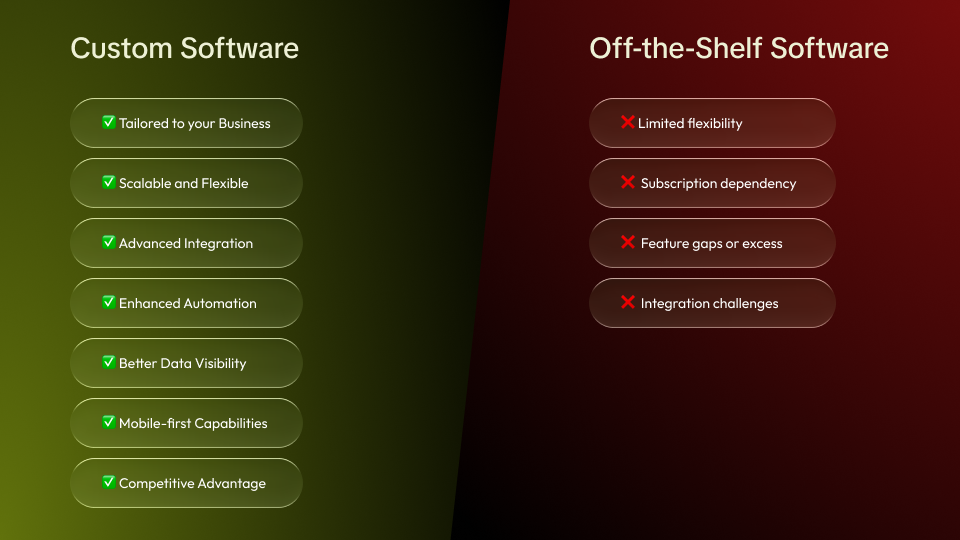
- Limited flexibility: The software may not fully match your unique workflows, requiring teams to adapt processes to fit the tool.
- Subscription dependency: Monthly or annual fees are necessary for ongoing use and support.
- Feature gaps or excess: You may pay for unnecessary features or lack critical functionality for your operations.
- Integration challenges: Off the shelf tools may not integrate well with existing systems, leading to fragmented workflows.
Scenario Example:
A Canadian retail chain may start with off the shelf inventory and sales tracking software. It works for a single store and simple reporting. But when the chain grows to multiple locations, needs real time analytics, and wants a mobile app for store managers, the off the shelf tool cannot meet these advanced needs. Workarounds become complex and inefficient, limiting scalability.
Best suited for:
- Businesses with standard workflows
- Companies needing quick, cost effective deployment
- Organizations testing new products or markets before committing to a larger investment
Canadian Perspective:
Even in Canada’s mature digital market, off the shelf software is often only a starting point, not a long term solution. Businesses that want to optimize, scale, or innovate will quickly encounter limitations.
(Pros & Cons)
Custom software is built from scratch to meet your business’s unique needs. Every feature, integration, and workflow is tailored, ensuring the software aligns perfectly with your operations and strategic goals.
Pros:
- Tailored to your business: Custom software matches workflows, team structures, and customer facing processes.
- Scalable and flexible: As business needs change, custom solutions can evolve, accommodating growth or new service lines.
- Advanced integration: Seamlessly connects with existing software, databases, mobile apps, and third party tools.(Gartner, 2022).
- Enhanced automation: Eliminates repetitive tasks and reduces errors, freeing teams to focus on strategic work.
- Better data visibility: Custom dashboards provide real time KPIs and actionable insights specific to your business.
- Mobile first capabilities: Tailored mobile apps for staff, customers, or partners improve engagement and productivity.
- Competitive advantage: Unique software features can differentiate your business in a crowded market.
(McKinsey & Company, 2021).
Cons:
- Higher initial investment: Custom development requires more planning and resources upfront.
- Longer deployment time: Designing, developing, testing, and implementing a solution takes weeks or months.
- Ongoing maintenance: Requires internal or vendor support to maintain and enhance the software.
Scenario Example:
A Canadian logistics company wants real time shipment tracking, driver apps, dynamic route optimization, and automated reporting. Off the shelf tools may only partially cover these needs, forcing manual tracking or process workarounds. A custom built solution integrates all systems, provides mobile access for drivers, automates reporting, and supports AI enabled predictive analytics creating a fully digitally aligned workflow that saves time, reduces errors, and improves customer service.
Best suited for:
- Businesses with complex or unique workflows
- Organizations planning for long term scalability
- Companies seeking efficiency, automation, and digital differentiation
Canadian Perspective:
Canadian organizations, despite being digitally advanced, often face fragmented systems or generic tools that do not fully support their operational or strategic goals. Custom software and mobile app development ensure digital tools are aligned with actual business processes, maximizing productivity, automation, and competitive advantage.(Deloitte, 2022; Government of Canada, 2022).
Which Option Is Right for Canadian Businesses?
Canada’s businesses are digitally mature but increasingly require digitally aligned custom solutions rather than just basic software.
Off the shelf software is ideal if:
- Workflows are standard and supported by existing tools
- Immediate deployment is required without large investment
- You’re testing a new product, service, or market
Custom software is ideal if:
- Workflows are complex, unique, or need full automation
- You require seamless integration between multiple systems
- Mobile first capabilities are critical for employees or customers
- Long term scalability, efficiency, and competitive differentiation are priorities
Canadian Reality:
Many organizations adopt off the shelf tools initially but eventually discover gaps in functionality, integration, and scalability. Advanced custom software and mobile apps are now essential for businesses that want:
- Unified digital ecosystems
- Automated, workflow specific processes
- Mobile applications for staff, partners, or customers
- Real time, actionable analytics
- Unique features that differentiate them in competitive markets

Even with many ready made tools available, Canadian businesses often struggle with:
- Disconnected platforms leading to workflow inefficiencies
- Missing industry specific features
- Limited automation for complex processes
- Generic mobile apps that don’t support employees or customers effectively
- Systems that don’t scale with growth or expansion plans
The solution is advanced custom software and mobile app development purpose built systems designed to align perfectly with workflows, integrate seamlessly with other tools, and support both operational and strategic goals.
Here’s how Canadian businesses benefit from custom solutions:
Improved Efficiency & Automation
Automation and workflow optimization are essential even in a digitally mature market. Custom software allows organizations to eliminate repetitive tasks, reduce errors, and accelerate processes.
A Toronto based logistics company used multiple systems to track shipments, driver schedules, and inventory. Employees spent hours manually updating spreadsheets and emailing updates.
With a custom built solution:
- Orders automatically sync from customer portals to delivery schedules
- Inventory levels update in real time across all warehouses
- Drivers use mobile apps for route updates, confirmations, and issue reporting
- Alerts notify managers about delays or anomalies
Tasks that took hours are now completed in minutes, staff focus on high value tasks, and delivery efficiency improves dramatically.
Custom software can also automate cross department workflows. For example, in retail or manufacturing, sales orders can trigger automatic procurement, inventory updates, and finance reporting all without manual intervention.
Better Data Security & Compliance
Canadian businesses must safeguard sensitive data while adhering to strict regulations like PIPEDA, provincial privacy laws, and industry specific compliance requirements.
A Montreal based health tech company needed a patient portal for scheduling appointments, telemedicine, and digital records access. Off the shelf tools offered some features but didn’t meet privacy standards.
With custom software:
- Data is encrypted at rest and in transit
- Role based access ensures only authorized staff can view patient information
- Audit trails track all activity for compliance and accountability
- Mobile apps include secure logins and encrypted communications
Enhanced trust with clients, risk mitigation, and the ability to scale services without violating compliance standards.
Custom software can also include industry specific certifications and automated compliance reporting, saving businesses time and reducing audit risks.
Scalability for Business Growth
Canadian businesses need software that grows with them. Off the shelf platforms may limit users, features, or system integrations, whereas custom solutions are built for flexibility and scalability.
A Vancouver based eCommerce company started with local sales but planned national expansion. Their off the shelf eCommerce software couldn’t handle multiple warehouses or dynamic shipping integrations.
With custom software:
- Multi warehouse inventory tracking and automated order routing
- AI driven demand forecasting for seasonal spikes
- Customer facing mobile app for order tracking and personalized recommendations
- Integration with accounting, CRM, and marketing platforms
Expansion occurs smoothly, and operational bottlenecks are eliminated. Custom software enables the business to scale without limits.
Custom solutions can also incorporate multi language support, multiple currencies, and mobile first design essential for Canadian businesses operating in diverse markets.
Competitive Advantage
In a digitally mature market, differentiation is key. Custom software enables businesses to offer services or efficiencies competitors cannot match.
A Calgary based real estate company wanted clients to schedule virtual tours, make offers, and track documents via a branded mobile app. Off the shelf tools could only handle part of the workflow.
With custom software:
- Clients use an integrated portal for property tours, bookings, and payments
- Agents receive real time notifications about client activity
- Analytics identify buyer preferences to tailor marketing campaigns
- The mobile app provides a seamless, branded experience
Clients feel more engaged, agents are more productive, and the company stands out in a competitive market.
Custom software can also incorporate predictive analytics, AI recommendations, and automated customer interactions turning operational tools into strategic assets.
Enhanced Employee Experience
Efficiency and automation also improve employee satisfaction and retention. Custom solutions reduce manual work, provide mobile access to tools, and streamline communication.
A Toronto consulting firm’s employees struggled with juggling multiple platforms for project management, timesheets, and client updates. (Innovation, Science and Economic Development Canada, 2022).
With a custom platform:
- Timesheets, project tracking, and client updates are unified
- Employees can submit updates and approvals via a mobile app
- Automated reminders and dashboards reduce miscommunication
Staff spend less time on administrative work, projects are delivered faster, and employee morale improves.
Improved Customer Experience
Custom software also enhances client satisfaction by providing tools tailored to their needs.
A Montreal based home services company created a mobile app for clients to book appointments, track service status, and make payments.
Customers receive timely updates, enjoy a seamless experience, and are more likely to return. In competitive markets like Canada, customer centric digital experiences become a differentiator.
Innovation Potential
Custom software enables continuous innovation. Businesses can incorporate AI, machine learning, predictive analytics, or advanced reporting to stay ahead.
A Vancouver retail chain uses a custom mobile app that tracks customer behavior in real time, recommending products, predicting inventory needs, and automating loyalty rewards.
The company improves sales, reduces overstock, and delivers a highly personalized customer experience advantages impossible with off the shelf tools.
Mobile App Development Trends in Canada
Canada’s mobile app ecosystem is rapidly evolving. Businesses are not just adopting mobile apps they are looking for strategically aligned, custom solutions that enhance operations, deliver superior customer experiences, and provide measurable business value.
While many ready made solutions exist in the market, they often fail to meet the unique needs of Canadian businesses, leaving gaps in integration, scalability, and personalization. As a result, companies are increasingly investing in advanced custom mobile app development to ensure apps are not only functional but also fully aligned with their business strategy.
Here’s a closer look at the top trends shaping the Canadian mobile app market today:

AI Powered Mobile Apps
Artificial Intelligence (AI) has moved from a futuristic concept to core functionality in mobile app development. In Canada, businesses are leveraging AI to create smart, adaptive apps that learn from user behavior and optimize workflows.
Key Features & Applications:
- Chatbots & Virtual Assistants: Offer 24/7 support, guide users through complex processes, and provide instant responses.
- Personalized Recommendations: Track user behavior to suggest content, products, or services tailored to each individual.
- Predictive Analytics: Forecast trends, user behavior, or resource needs to make proactive decisions.
Engaging Example:
A Toronto based retail chain uses a custom AI powered app to suggest products based on seasonal trends, customer loyalty data, and previous purchases. Unlike generic apps, this custom solution integrates seamlessly with inventory, loyalty programs, and mobile payments, providing a fully personalized shopping experience.
Impact:
- Enhances user engagement and satisfaction
- Reduces operational costs by automating customer support
- Improves retention with personalized, context aware experiences
Canadian Perspective:
Even though AI features exist in many apps, generic solutions rarely integrate with a company’s unique processes, systems, or data, limiting their effectiveness. Custom AI powered apps provide full digital alignment with operational goals and customer expectations.
Fintech & Secure Payment Apps
The Canadian fintech market is highly competitive, with consumers expecting secure, seamless, and innovative financial solutions. Custom mobile apps are crucial for providing these experiences while maintaining compliance with strict financial regulations.
Key Features & Applications:
- Digital Wallets & Banking Apps: Manage accounts, pay bills, and transfer funds directly from smartphones.
- Secure Authentication: Multi factor authentication, biometrics, and end to end encryption protect sensitive financial data.
- Instant Payments & Peer to Peer Transfers: Streamlined, real time transactions improve user convenience and trust.
Engaging Example:
A Vancouver based fintech startup created a custom mobile banking app that not only allows instant payments but also provides AI powered financial advice. The app integrates seamlessly with accounting software, CRM systems, and marketing automation features unavailable in generic off the shelf apps.
Impact:
- Builds trust through robust security and compliance
- Enhances convenience and user loyalty
- Enables businesses to integrate financial services across other apps, including marketplaces or eCommerce platforms
Canadian Perspective:
Even with many banking apps available, off the shelf solutions rarely meet the full strategic and operational needs of fintech businesses, driving demand for advanced custom mobile solutions.
Health Tech & Telemedicine Apps
The demand for health tech apps in Canada continues to rise, driven by remote care needs and efficiency expectations. Custom mobile apps are helping healthcare providers improve accessibility, streamline operations, and enhance patient engagement.
Key Features & Applications:
- Remote Monitoring: Track vital signs, medication adherence, or chronic conditions in real time.
- Appointment Scheduling & Reminders: Reduce administrative burden and improve patient access.
- Teleconsultation & Video Calls: Provide remote consultations for patients in urban and remote areas.
Engaging Example:
A Montreal based telemedicine provider built a custom mobile app allowing patients in rural areas to schedule appointments, consult doctors via video calls, and securely share medical documents. Unlike generic apps, this custom solution integrates with EMR systems, billing, and compliance tools, providing a fully aligned digital healthcare ecosystem.
Impact:
- Improves patient access to care and engagement
- Reduces strain on clinics and administrative teams
- Ensures secure handling of sensitive health data
Canadian Perspective:
While standard telemedicine apps exist, custom apps allow Canadian healthcare providers to integrate services fully with internal systems, regulatory requirements, and patient workflows, creating better outcomes and operational efficiency.
eCommerce & Marketplace Apps
Mobile apps are increasingly critical for Canadian eCommerce and marketplace businesses. Custom solutions offer personalization, seamless checkout, and advanced analytics that off the shelf solutions cannot provide.
Key Features & Applications:
- Personalized Shopping Experiences: Suggest products based on browsing behavior, purchase history, and location.
- Loyalty Programs & Rewards: Integrated programs encourage repeat purchases and improve retention.
- Seamless Checkout & Payment: Reduce friction and cart abandonment with mobile optimized payments.
- Push Notifications & Offers: Deliver timely, targeted promotions to increase engagement.
Engaging Example:
A Calgary based online marketplace built a custom mobile app that combines AI powered recommendations, loyalty rewards, and integrated payment gateways. Unlike generic platforms, it connects directly with the company’s warehouse, CRM, and analytics systems creating a fully connected, highly engaging shopping ecosystem.
Impact:
- Boosts sales and repeat purchases through personalized experiences
- Improves customer engagement and loyalty
- Provides actionable insights for marketing and operations
Canadian Perspective:
Even though many eCommerce apps exist, off the shelf apps often fail to integrate fully with business operations, limiting the ability to scale and deliver advanced customer experiences. Custom apps allow full digital alignment, enabling businesses to compete in Canada’s sophisticated digital economy.
Additional Mobile App Development Trends
Beyond these core categories, Canadian businesses are leveraging advanced technologies and strategies to stay competitive:
- AR/VR Integration: Immersive experiences in retail, real estate, and education.
- IoT Enabled Apps: Real time tracking and automation for logistics, manufacturing, and smart home solutions.
- Cross Platform Mobile Apps: Ensure consistent experiences on iOS, Android, and web apps.
- AI & Predictive Analytics: Automate operations, forecast demand, and optimize user experiences.
- Blockchain & Secure Data Handling: For fintech, supply chain, and digital identity applications.
Custom Software & Mobile App Development Process in Canada
Developing custom software or mobile apps is more than writing code it’s a structured, strategic journey that transforms business ideas into advanced, scalable, and user friendly digital solutions.
In Canada, businesses are already digitally equipped, with cloud tools, analytics dashboards, and mobile platforms in place. However, ready made solutions often fall short of meeting the specific workflows, integration requirements, and strategic objectives of Canadian companies. This is why organizations are increasingly investing in digitally aligned custom software and mobile app development that is tailored to their operational realities.
A clear, structured development process ensures the software is not only functional but also aligned with business goals, regulatory requirements, and long term growth plans.
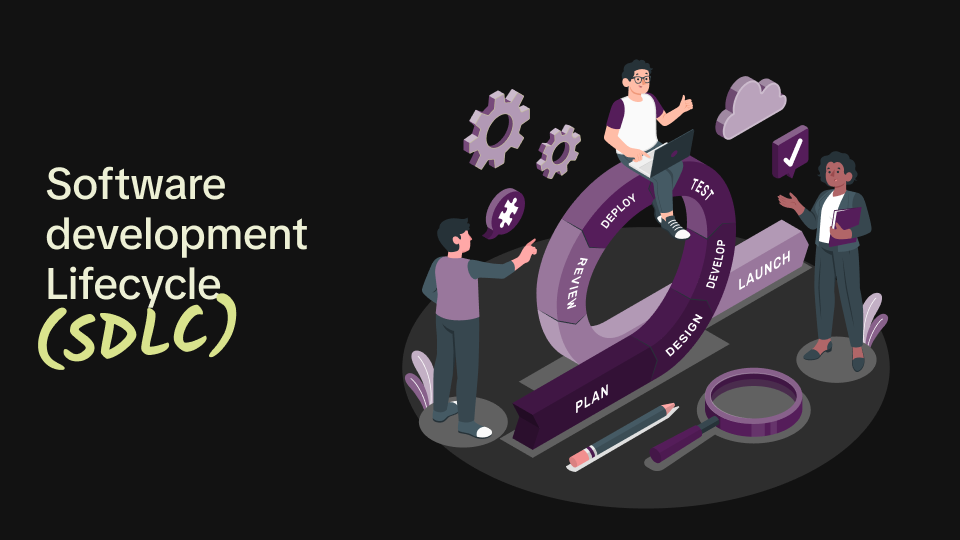
Here’s a step by step overview:
Discovery & Requirement Analysis
The first stage lays the foundation. Even in a digitally mature environment like Canada, understanding unique business processes, user expectations, and technical requirements is critical.
Key Steps:
- Identify Business Goals: Determine what the software or app should achieve whether it’s automating processes, enhancing customer engagement, improving operational efficiency, or creating new revenue streams.
- Define Technical Requirements: Decide on platforms (iOS, Android, web), integration needs (ERP, CRM, payment gateways), cloud hosting, database architecture, and compliance with Canadian regulations like PIPEDA.(Government of Canada, 2022)
- Stakeholder Interviews & Market Research: Gather input from employees, management, and customers to identify pain points and priorities.
- Scope Definition & Roadmap: Outline features, timelines, and deliverables to prevent scope creep and ensure alignment with business strategy.
UX/UI Design & Prototyping
Even in advanced markets, users reject software that is difficult or confusing to use. UX/UI design ensures the app is intuitive, engaging, and aligned with user behavior.
Key Steps:
- User First Design: Focus on interfaces that are simple, clear, and tailored to Canadian users’ expectations.
- Wireframes & Mockups: Low fidelity layouts show navigation and feature placement.
- Clickable Prototypes: Simulate workflows so stakeholders can test and provide feedback.(IBM, 2022)
- User Testing & Feedback: Early testing identifies usability issues, ensuring the final product is engaging and effective.
Engaging Example:
A Vancouver based health tech company created a telemedicine app. Early prototypes allowed patients and healthcare providers to test appointment scheduling, teleconsultations, and prescription management. Feedback led to a streamlined interface that reduced scheduling errors by 40%.
UX/UI design reduces adoption barriers, improves user satisfaction, and ensures the software is functional and enjoyable.
Development Phase
Once design is finalized, development brings the solution to life. In Canada’s dynamic digital environment, iterative and agile development ensures flexibility and responsiveness.
Key Practices:
- Agile Methodology: Iterative cycles allow teams to adapt to feedback, changing business needs, and market trends.
- Sprint Based Delivery: Features are delivered incrementally in 2–4 week sprints for faster feedback and deployment.
- Backend & Frontend Development: Backend manages data, integrations, and security, while frontend focuses on user interaction and experience.
- Integration & APIs: Seamless connection with other systems such as payment gateways, CRMs, ERPs, and analytics platforms.
Engaging Example:
A Calgary eCommerce company needed a mobile app integrated with their inventory, loyalty program, and AI driven recommendation engine. Using agile sprints, developers launched modules in phases, allowing real time inventory tracking and personalized shopping experiences from the start.
Agile development delivers high quality, flexible, and business aligned solutions, reducing time to market while accommodating evolving requirements.
Testing & Quality Assurance (QA)
Rigorous QA ensures software is secure, stable, and reliable, a crucial requirement for Canadian businesses handling sensitive data.
Key Types of Testing:
- Functional Testing: Confirms all features work as intended.(Gartner, 2022)
- Security Testing: Identifies vulnerabilities and ensures compliance with privacy laws.
- Performance Testing: Validates that the app handles expected user loads smoothly.
- User Acceptance Testing (UAT): Involves end users to confirm the software meets expectations.
Deployment & Launch
Deployment involves making the software accessible to end users, whether on mobile devices or web platforms.
Key Steps:
- App Store / Play Store Launch: Submit mobile apps following iOS and Android guidelines.
- Web or Cloud Deployment: Deploy web apps on cloud servers for scalability, reliability, and global access.
- Monitoring Setup: Track performance, errors, and user behavior in real time.
A Montreal logistics company launched its custom mobile app for drivers and warehouse staff. Real time monitoring tools tracked delivery performance, route efficiency, and inventory levels, allowing management to address issues proactively.
Post Launch Support & Maintenance
Custom software is never truly finished. Continuous support, updates, and improvements ensure it remains valuable.
Key Steps:
- Bug Fixes & Issue Resolution: Resolve user reported problems quickly.
- Regular Updates: Improve functionality, security, and compatibility with new OS versions.
- Feature Enhancements: Add modules based on feedback, business growth, or market demands.
- Security Updates: Maintain compliance with evolving data protection standards in Canada.
A Vancouver eCommerce marketplace continuously updated its mobile app with AI powered recommendations, loyalty program enhancements, and secure mobile payments to remain competitive and digitally aligned with customer needs.
Why Following a Structured Process Matters
Even in Canada’s digitally advanced business landscape, a structured development process is critical:
- Avoids costly mistakes and delays
- Delivers high quality, user friendly, and secure software
- Adapts to changing market conditions and business priorities
- Ensures compliance with Canadian regulations like PIPEDA
- Maximizes long term ROI, scalability, and competitive advantage (Deloitte, 2022; Statistics Canada, 2023)
Businesses that follow a structured process often achieve faster time to market, higher user adoption, and stronger customer satisfaction, turning software development into a strategic advantage, not just a technical task.
Canadian Perspective:
Even with numerous ready made apps, Canadian businesses need custom, digitally aligned solutions to fully leverage technology for operational efficiency, advanced automation, and strategic growth. Custom software and mobile apps are no longer optional they are essential tools for competing and innovating in a digitally mature market.(McKinsey & Company, 2021).
Cost of Custom Software & Mobile App Development in Canada
Understanding the cost of custom software and mobile app development in Canada is essential for businesses planning to invest in technology. Costs vary widely depending on complexity, features, platform, and long term maintenance. But looking at it from a value and ROI perspective helps businesses make smarter decisions rather than just focusing on upfront expenses.(Statistics Canada, 2023; Deloitte, 2022).

Factors That Affect Cost
Several factors determine the overall cost of developing software or apps:
- Features & Functionality
- More complex features like AI integration, real time analytics, or payment gateways increase development time and cost.
- Simple apps with basic functionality are cheaper but may not meet future business needs.
- More complex features like AI integration, real time analytics, or payment gateways increase development time and cost.
- Platform
- Native iOS or Android apps require separate development, increasing cost.
- Cross platform apps save money with a single codebase but may slightly compromise performance for complex features.
- Native iOS or Android apps require separate development, increasing cost.
- Integrations
- Connecting with existing tools such as CRMs, ERP systems, or third party APIs adds complexity and cost.
- Connecting with existing tools such as CRMs, ERP systems, or third party APIs adds complexity and cost.
- Timeline & Delivery
- Faster delivery requires larger development teams or extended working hours, impacting cost.
- Flexible timelines allow for phased development, which can help spread out expenses.
- Faster delivery requires larger development teams or extended working hours, impacting cost.
Average Pricing in Canada
Custom software development costs in Canada vary depending on the size and complexity of the project:
- Hourly Rates:
- Typical rates for Canadian developers range from CAD $50 to $150 per hour, depending on expertise and region.
- Typical rates for Canadian developers range from CAD $50 to $150 per hour, depending on expertise and region.
- Small Projects:
- Simple apps or internal tools can cost CAD $10,000–$50,000, depending on features.
- Simple apps or internal tools can cost CAD $10,000–$50,000, depending on features.
- Medium to Large Projects:
- Complex apps with advanced features, multiple integrations, or enterprise level solutions can cost CAD $50,000–$250,000+.(Gartner, 2022)
- Complex apps with advanced features, multiple integrations, or enterprise level solutions can cost CAD $50,000–$250,000+.(Gartner, 2022)
Cost vs Value (ROI Perspective)
While custom software and apps may have a higher upfront cost than off the shelf solutions, the long term value is often much greater:
- Efficiency Gains: Automated workflows reduce manual work, saving time and operational costs.
- Scalability: Software grows with your business, eliminating frequent replacements or forced upgrades.
- Competitive Advantage: Tailored solutions provide unique features and better customer experiences.
- Reduced Errors & Risks: Custom solutions minimize human error and improve data security, avoiding costly mistakes.(IBM, 2022).
How Custom Software Delivers ROI
Investing in custom software isn’t just a short term expense it’s a long term business strategy. By aligning the software with your processes, customers, and growth goals, it delivers measurable returns. Understanding the ROI of custom software helps businesses justify the investment and plan for maximum impact.
Operational Efficiency
Custom software can transform everyday operations, making workflows faster, reducing errors, and improving collaboration.
Key Advantages:
- Automated Workflows: Tasks that previously required manual input like data entry, report generation, or approval processes are handled automatically.
- Integrated Systems: Custom solutions connect multiple tools and platforms (CRM, ERP, accounting software) in one ecosystem, eliminating duplicate work.
- Real Time Insights: Dashboards and analytics give teams instant visibility into operations, helping managers make quicker, more informed decisions.
A Canadian logistics company replacing spreadsheets with a custom delivery management system reduced order processing time by 50% and minimized human errors.
Businesses save time, labor costs, and resources, while employees can focus on strategic, value added tasks.
Customer Experience Improvement
Customer satisfaction drives loyalty, repeat business, and revenue growth. Custom software allows businesses to personalize and optimize customer interactions.
Key Advantages:
- Tailored Interfaces & Features: Customer portals, mobile apps, or web dashboards are built to meet the specific needs of your audience.
- Faster Response Times: Automated notifications, chatbots, and support tools reduce wait times and improve communication.
- Seamless Experiences: Integrations with payment systems, tracking tools, and loyalty programs create a smooth, engaging journey for users.
A Canadian eCommerce platform using a custom app with personalized product recommendations increased repeat purchases by 30% within six months.
Improved engagement, satisfaction, and retention lead to higher revenue, lower customer churn, and stronger brand loyalty.
Long Term Cost Savings
Custom software often reduces recurring costs and unnecessary expenditures compared to off the shelf solutions.
Key Advantages:
- No Recurring License Fees: Unlike subscription based software, you pay once for a tailored solution.
- Reduced Dependency on Multiple Tools: Integrated features eliminate the need for additional software subscriptions.
- Lower Maintenance Costs Over Time: Software evolves with your business, reducing the need for frequent replacements or workarounds.
A financial services firm invested in a custom CRM and analytics system, eliminating three separate software subscriptions and saving CAD $15,000 annually.
The upfront cost is offset by long term savings, efficiency gains, and scalable growth opportunities.
Data Driven Decision Making
Custom software often comes with built in analytics and reporting tools. Businesses can:
- Track key performance indicators (KPIs) in real time.
- Make faster, informed decisions.
- Identify areas for optimization or cost reduction.
Access to actionable insights reduces mistakes, improves productivity, and supports strategic business growth.
How to Choose the Right Software Development Company in Canada
Selecting the right partner can make or break a custom software or mobile app project. The right company ensures the solution is high quality, scalable, secure, and delivered on time.
Key Qualities to Look For
- Experience:
- Years in the industry and expertise in custom software or mobile apps.
- Familiarity with Canadian business regulations and industry specific standards.
- Portfolio & Case Studies:
- Examples of completed projects demonstrate their capability.
- Look for projects similar in scope, complexity, or industry.
- Industry Knowledge:
- Understanding your sector ensures better solution design.
- Specialized knowledge reduces the learning curve and aligns the software with real world business challenges.
- Technology Stack Expertise:
- Proficiency in modern frameworks, languages, and platforms ensures future proof solutions.
Questions to Ask Before Hiring
Before committing, ask:
- Timeline: How long will development take? Are milestones clearly defined?
- Cost: What is included in the estimate? Are there potential hidden fees?
- Support Model: What kind of post launch maintenance and updates are provided?
- Project Management Approach: Agile, Scrum, or waterfall methodology? How will progress be communicated?
Clear answers prevent surprises, improve collaboration, and ensure expectations are aligned.(Deloitte, 2022)
Local vs Offshore Development
Choosing between local, offshore, or hybrid development depends on your priorities:
Local Companies:
- Easier communication and collaboration.
- Better understanding of Canadian business practices and legal requirements.
- Faster response times for support or iterations.
Offshore Companies:
- Lower development costs.
- Access to a larger talent pool.
- Time zone differences may delay communication and updates.
Hybrid Approach:
- Combines local project management with offshore development teams.
- Balances cost savings, control, and quality.
Selecting the right model ensures timely delivery, quality software, and long term success.
Additional Tips for Choosing the Right Partner
- Look for companies with transparent processes and clear communication.
- Check references or client testimonials for credibility.
- Ensure they follow best practices in security, testing, and post launch support.
The best software development partner not only delivers code they become a strategic technology ally, guiding your business toward efficiency, growth, and measurable ROI.
Future of Custom Software & App Development in Canada
The future of software and mobile app development in Canada is exciting and rapidly evolving. Businesses that stay ahead of trends and emerging technologies can gain a competitive edge, increase efficiency, and deliver better experiences to customers. As the market grows, Canadian companies must plan strategically to leverage innovation, maintain security, and stay scalable.(Statistics Canada, 2023)
Emerging Technologies
Several cutting edge technologies are shaping the future of software development:
- Artificial Intelligence & Machine Learning (AI & ML)
- AI is no longer optional apps are increasingly expected to personalize experiences, automate tasks, and provide predictive insights.
- Machine learning analyzes patterns and trends to enable smarter decision making.
- Example: A Canadian retail app predicts customer preferences and automatically adjusts recommendations or offers.
- Business Benefit: Improves customer engagement, reduces operational workload, and increases conversion rates.
- Future Trend: AI will move from simple automation to deep personalization, helping businesses anticipate customer needs before they arise.
- AI is no longer optional apps are increasingly expected to personalize experiences, automate tasks, and provide predictive insights.
- Blockchain Technology
- Provides secure, transparent, and tamper proof transaction records.
- Applications include fintech (digital payments), supply chain management, and identity verification.
- Example: Blockchain powered payment platforms allow faster, more secure cross border transactions for Canadian businesses.
- Business Benefit: Enhances security, builds trust, and ensures compliance with regulations.
- Future Trend: Adoption will expand into healthcare, real estate, and government services for secure data handling.
- Provides secure, transparent, and tamper proof transaction records.
- Internet of Things (IoT)
- Connects devices to collect data, automate operations, and improve monitoring.
- Example: Canadian logistics companies use IoT enabled sensors to track shipments, monitor warehouse conditions, and optimize routes in real time.
- Business Benefit: Improves efficiency, reduces waste, and provides actionable insights for decision making.
- Future Trend: IoT integration with AI will allow predictive maintenance, smarter inventory management, and better operational efficiency.
- Connects devices to collect data, automate operations, and improve monitoring.
- Low Code / No Code Platforms
- Enable faster app development with minimal coding, empowering non technical teams to create internal tools or simple customer facing apps.
- Example: A startup builds an internal dashboard for tracking customer interactions without hiring a full development team.
- Business Benefit: Reduces development cost, speeds up time to market, and encourages innovation within teams.
- Future Trend: Hybrid models combining low code tools with professional development will become standard for rapid prototyping and scaling.
- Enable faster app development with minimal coding, empowering non technical teams to create internal tools or simple customer facing apps.
Growing Industries Driving Software Demand
Certain industries in Canada are fueling the need for custom software and mobile apps:
- Healthcare
- Telemedicine, patient monitoring apps, appointment booking, and AI assisted diagnostics.
- Future Focus: Remote healthcare solutions and AI enabled predictive care tools.
- Telemedicine, patient monitoring apps, appointment booking, and AI assisted diagnostics.
- Fintech
- Mobile banking, digital wallets, AI powered financial analytics, and blockchain transactions.
- Future Focus: Open banking, crypto integration, and personalized financial management apps.
- Mobile banking, digital wallets, AI powered financial analytics, and blockchain transactions.
- SaaS (Software as a Service)
- Cloud based solutions for businesses requiring scalable, subscription based software.
- Future Focus: Niche SaaS products, AI driven SaaS analytics, and highly customizable platforms.
- Cloud based solutions for businesses requiring scalable, subscription based software.
- Logistics & Supply Chain
- Inventory tracking, route optimization, automated warehouses, and delivery management.
- Future Focus: AI + IoT integration to predict delays, optimize shipping, and reduce operational costs.
- Inventory tracking, route optimization, automated warehouses, and delivery management.
These industries will continue to drive demand for innovative, custom built solutions, creating opportunities for businesses to differentiate themselves.
What Canadian Businesses Should Prepare For
To thrive in the coming years, companies must adopt forward looking strategies:
- Mobile First Strategies
- Canadians increasingly rely on mobile devices for work and personal tasks.
- Apps must prioritize mobile performance, usability, and accessibility.
- Canadians increasingly rely on mobile devices for work and personal tasks.
- Automation & AI Integration
- Automating repetitive tasks saves time and increases accuracy.
- AI driven insights enable data informed business decisions and smarter customer interactions.

- Automating repetitive tasks saves time and increases accuracy.
- Enhanced Data Security & Compliance
- Compliance with Canadian laws like PIPEDA and emerging privacy regulations is essential.
- Future software must include robust encryption, secure authentication, and proactive monitoring.
- Compliance with Canadian laws like PIPEDA and emerging privacy regulations is essential.
- Scalable & Flexible Solutions
- Custom software should grow with the business, adapting to new technologies, user needs, and market changes.
- Sustainability & Green Tech Considerations
- Energy efficient and optimized software is becoming a factor in corporate responsibility.
- Businesses may need to integrate eco friendly practices into their digital solutions.
- Energy efficient and optimized software is becoming a factor in corporate responsibility.
The future of software development in Canada is dynamic, tech driven, and customer focused. Companies that embrace AI, IoT, blockchain, mobile first strategies, and scalable solutions will stay competitive, efficient, and innovative.
Start exploring AI, IoT, blockchain, and low code platforms today. Early adoption can give Canadian businesses a first mover advantage, reduce costs, improve customer experience, and position them as leaders in their industries.
Frequently Asked Questions
1.How long does custom software development take?
The development timeline for custom software depends on the project scope, technical complexity, team size, and chosen technology stack.
- Small MVP (Minimum Viable Product): 4–8 weeks
- Medium business software: 3–6 months
- Enterprise level platforms: 6–18 months or longer
Many companies use Agile development methodologies, which allow them to launch core features quickly and continuously improve the product through iterative updates instead of waiting for a full release.
2. How much does mobile app development cost in Canada?
Mobile app development costs in Canada vary based on features, platforms (iOS, Android, or cross platform), design complexity, and backend infrastructure.
- Simple app: CAD 25,000 – CAD 60,000
- Medium complexity app: CAD 60,000 – CAD 150,000
- Enterprise or SaaS applications: CAD 150,000 – CAD 500,000+
To optimize budgets, many Canadian companies work with offshore development teams while maintaining product management and strategy locally. This hybrid model offers high quality at a lower cost.
3. Is custom software secure?
Yes, custom software can be extremely secure when built using industry best practices. Security measures typically include:
- Secure coding standards
- End to end data encryption
- Role based access control (RBAC)
- Regular security audits and penetration testing
Unlike generic software, custom built systems are designed specifically for your business environment, reducing exposure to common vulnerabilities and improving data protection.
4. Can software be updated later?
Absolutely. Custom software is designed to be scalable and adaptable. Businesses can:
- Add new features
- Integrate third party tools and APIs
- Improve performance and UI/UX
- Update security protocols and compliance features
Modern architectures such as microservices and cloud based infrastructure make future updates faster, more flexible, and cost effective.
5. Do startups need custom software?
Not every startup needs custom software in the early stage, but high growth startups often benefit from it. Custom software helps startups:
- Automate manual operations
- Scale faster without technical limitations
- Build unique digital products
- Gain a strong competitive advantage
Many startups begin with an MVP and gradually expand their custom software as their business grows and funding increases.

Let’s Turn Your Vision into Reality
Investing in custom software and mobile app development gives Canadian businesses a strategic digital advantage. While Canada is already digitally mature, many companies find that off the shelf solutions though abundant cannot fully meet their unique operational requirements. Generic software often lacks the flexibility, integration capabilities, or advanced features needed to optimize workflows, support growth, and maintain a competitive edge.
Custom solutions are designed to align perfectly with your business needs, ensuring technology works for you, not the other way around. (Statistics Canada, 2023).
Key Benefits of Custom Software for Canadian Businesses
- Streamlined Operations: Consolidate processes into one integrated system, reducing manual tasks and inefficiencies.
- Increased Productivity: Automate repetitive or time consuming work so teams can focus on high value activities.
- Enhanced Customer Experience: Build personalized portals, dashboards, and mobile apps that engage clients effectively.
- Scalability for Growth: Expand and adapt your software as your business grows, without costly replacements or disruptive upgrades.
- Competitive Advantage: Develop innovative features and workflows that differentiate your business in a competitive market.
Strategic Considerations
Even advanced software cannot deliver its full potential without the right development partner. A reliable custom software company ensures:
- Expert Guidance: Support from planning and design to deployment and post launch maintenance.
- Secure, High Quality Code: Built for performance, reliability, and compliance with Canadian data protection standards.
- Transparent Communication: Clear updates on milestones, progress, and delivery timelines.
- Ongoing Support & Evolution: Continuous improvements, feature updates, and security enhancements to keep software aligned with evolving business needs.
Why Act Now?
Custom software is not just a tool it’s a strategic investment. Canadian businesses that embrace digitally aligned, advanced custom solutions can:
- Optimize internal workflows and reduce operational costs
- Enhance the digital experience for customers and employees
- Scale efficiently to support long term growth
- Maintain a technological edge over competitors
How to Start
- Assess Your Needs: Map your workflows, identify pain points, and determine which processes require optimization.
- Define Your Goals: Specify what problems the software or app should solve and the results you want to achieve.
- Partner with Experts: Collaborate with a development team experienced in custom, advanced digital solutions that are built to scale.
Canada’s business landscape demands software that goes beyond generic functionality. Investing in advanced custom software and mobile app development ensures your business stays efficient, competitive, and digitally forward, providing solutions that truly match your operational, regulatory, and strategic needs.
Don’t settle for off the shelf software. Choose a solution that grows with your business, meets your unique requirements, and keeps you ahead in the digital era.