

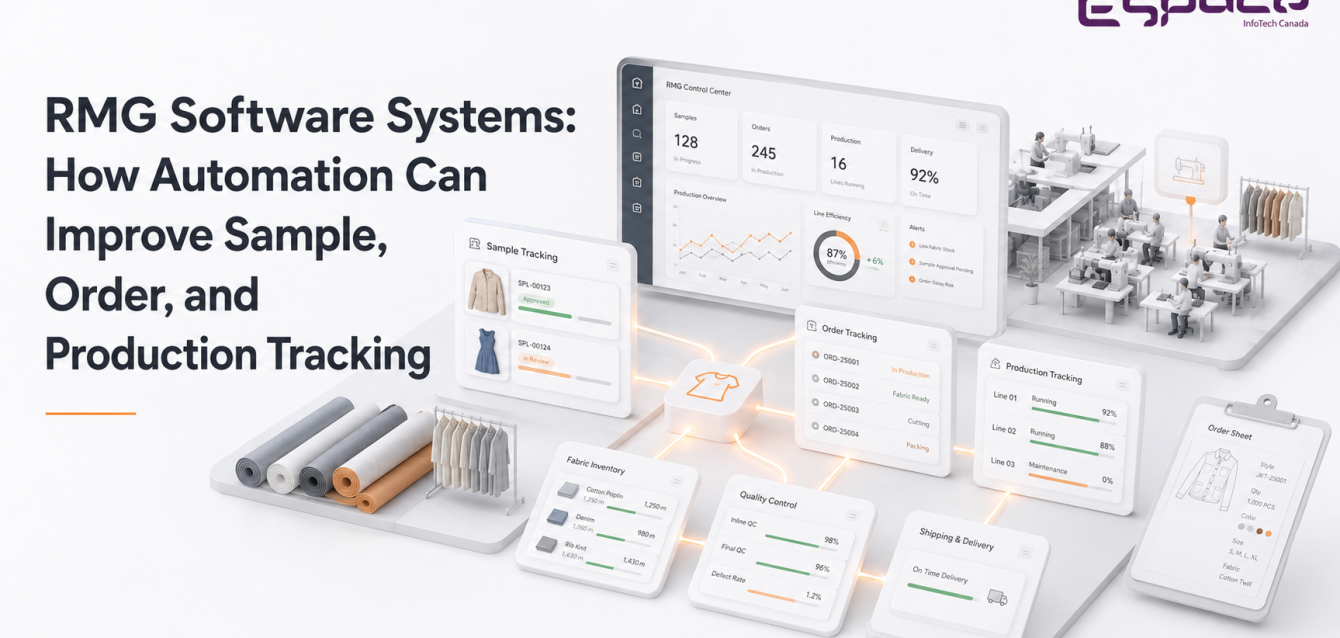
RMG software systems are becoming essential for garment manufacturers that want better visibility, faster communication, and stronger control over daily operations.
In the ready-made garment industry, every stage matters. A sample delay can affect buyer approval. A missed order update can create confusion. A production issue can impact shipment timelines. When teams depend on manual follow-ups, spreadsheets, phone calls, and scattered messages, tracking becomes difficult.
Automation helps solve this problem.
With the right RMG software system, factories can track samples, orders, production status, approvals, quality checks, and delivery progress from one connected platform. This reduces manual pressure, improves accountability, and helps teams make faster decisions.
What Are RMG Software Systems?
RMG software systems are digital platforms designed to manage garment manufacturing workflows. These systems help factories, buying houses, merchandisers, production teams, quality teams, and management track important activities in real time.
A complete RMG software system may include:
- Sample tracking
- Order management
- Production planning
- Material tracking
- Buyer communication
- Approval workflows
- Quality control
- Shipment tracking
- Reporting dashboards
- User role management
The goal is simple: bring all critical information into one place so teams can work with better clarity.
Why Manual Tracking Creates Problems in RMG Operations
Many RMG businesses still manage important updates through spreadsheets, email threads, WhatsApp messages, and verbal communication.
This may work for a small team, but it becomes risky as the business grows.
Common problems include:
- Delayed sample updates
- Missing approval history
- Confusion between departments
- Repeated follow-ups
- Inaccurate order status
- Production bottlenecks
- Lack of real-time visibility
- Difficulty tracking responsibility
- Late decision-making
- Weak reporting for management
In garment manufacturing, timing is critical. If one department is delayed, the impact can move across the full order lifecycle.
That is why automation is not only a technical upgrade. It is an operational need.
RMG Software Systems for Sample Tracking
Sample development is one of the most important stages in the garment business. Buyers often need different sample versions before confirming an order.
Without a proper tracking system, teams may struggle to know:
- Which sample is under development
- Which version was sent
- Who approved or rejected it
- What changes were requested
- When the next submission is due
- Which department is responsible
A sample tracking system can organize the full sample workflow from request to approval.
Merchandisers can create sample requests, upload specifications, assign tasks, track status, collect feedback, and maintain approval history.
This helps reduce confusion and ensures that everyone works from the same information.
Better Order Tracking with Automation
Once an order is confirmed, teams need to track many moving parts. Style details, buyer requirements, fabric status, trims, production plan, delivery date, inspection schedule, and shipment updates all need proper coordination.
Order tracking software helps teams monitor each order from confirmation to delivery.
A strong order tracking module should include:
- Order details
- Buyer information
- Style and quantity
- Delivery timeline
- Material status
- Approval status
- Production progress
- Quality updates
- Shipment status
- Delay alerts
Automation makes the process easier by sending reminders, updating status, and notifying responsible teams when action is required.
This reduces dependency on manual follow-ups.
Production Tracking for Better Visibility
Production tracking is where real-time visibility becomes highly valuable.
Factory managers need to know what is happening on the floor. Which line is working on which order? How much has been completed? Where is the delay? Is production matching the plan?
A production tracking system can help teams monitor cutting, sewing, finishing, quality checking, packing, and shipment preparation.
With digital production updates, managers can identify problems earlier instead of waiting until the end of the day or week.
This improves planning and helps reduce last-minute pressure.
How Automation Improves RMG Workflow
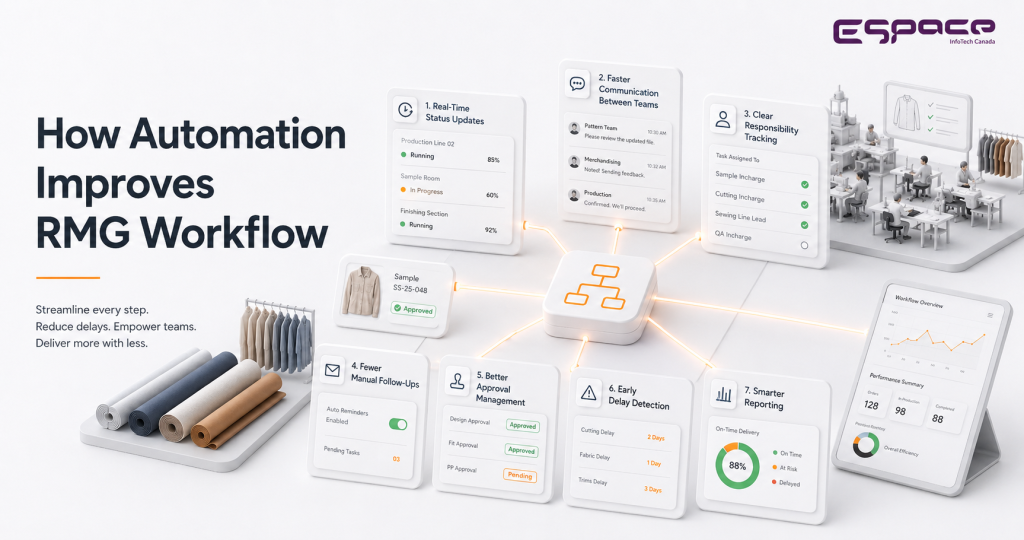
1. Real-Time Status Updates with RMG Software Systems
Automation allows teams to update sample, order, and production status in real time. This gives managers and departments better visibility without waiting for manual reports.
2. Faster Communication Between Teams
Merchandising, sampling, production, quality, and shipment teams often need to work together. A centralized platform reduces scattered communication and keeps everyone aligned.
3. Clear Responsibility Tracking
RMG software systems can assign tasks to specific users or departments. This makes it easier to understand who is responsible for each stage.
4. Fewer Manual Follow-Ups
Automated notifications and reminders reduce the need for repeated phone calls, messages, and email follow-ups.
5. Better Approval Management
Sample approvals, buyer feedback, document updates, and internal decisions can be stored in one system. This creates a clear approval history.
6. Early Delay Detection
When a task or order stage is delayed, the system can alert the responsible team. This helps managers take action before the delay becomes bigger.
7. Smarter Reporting
Automated dashboards help management understand order progress, sample status, production performance, pending tasks, and department efficiency.
Key Features of an RMG Software System
A practical RMG software system should be designed around real factory workflows.
Important features may include:
- Sample request and approval tracking
- Order management dashboard
- Production planning and progress tracking
- Buyer and style management
- Task assignment and reminders
- Department-wise workflow visibility
- Quality control updates
- Document and tech pack management
- Inventory or material status tracking
- Shipment progress tracking
- Role-based access control
- Reporting and analytics dashboard
The system should be simple enough for daily users and detailed enough for managers.
AI Implementation in RMG Software Systems
AI can make RMG software systems more useful when it is applied to real operational problems.
AI can help identify production delays, predict order risks, summarize workflow updates, recommend priority tasks, and highlight bottlenecks. For example, if sample approval is delayed or production progress is slower than planned, the system can alert managers early.
AI can also support reporting by turning complex production data into simple insights. Instead of only showing numbers, the system can explain what needs attention, which orders are at risk, and where teams should focus first.
The goal of AI in RMG is not to replace people. It is to help teams make faster and better decisions.
Why Custom RMG Software Development Matters
Every garment business has its own process. A buying house, a small factory, a large production unit, and an export-focused manufacturer may not follow the same workflow.
Ready-made software may cover basic needs, but custom RMG software systems give businesses more flexibility.
Custom development allows companies to design modules around their real process, user roles, approval steps, reporting needs, buyer requirements, and production structure.
This makes the system more practical and easier to adopt.
Conclusion
RMG software systems can improve how garment businesses manage samples, orders, and production tracking.
By replacing manual follow-ups with automation, teams can work with better visibility, faster communication, and clearer accountability.
Real-time updates help managers detect delays early. Digital dashboards make reporting easier. AI-powered insights help teams focus on what matters most.
For garment manufacturers, automation is not only about saving time. It is about building a more controlled, transparent, and scalable operation.
Ready to improve your RMG workflow? Espace Infotech Canada Inc. can help you build custom RMG software systems for sample tracking, order management, production visibility, and workflow automation.
FAQ
What are RMG software systems?
RMG software systems are digital platforms that help garment businesses manage sample tracking, order management, production progress, quality control, reporting, and workflow automation.
How does automation improve sample tracking?
Automation helps teams track sample requests, versions, approvals, feedback, deadlines, and responsible departments from one platform.
Why is order tracking important in the RMG industry?
Order tracking helps teams monitor buyer requirements, material status, production progress, quality updates, and shipment timelines more accurately.
How can production tracking software help garment factories?
Production tracking software gives managers visibility into cutting, sewing, finishing, quality checking, packing, and shipment preparation.
Can AI be used in RMG software systems?
Yes. AI can help detect delays, predict order risks, summarize reports, highlight bottlenecks, and recommend priority actions.
Can Espace Infotech Canada build custom RMG software?
Yes. Espace Infotech Canada Inc. can build custom RMG software systems for sample tracking, order management, production tracking, dashboards, automation, and AI-powered insights.