Car dealership software is becoming more important as dealerships move from manual sales processes to connected digital operations. Today, customers expect faster responses, accurate vehicle information, smooth communication, and a better buying experience.
At the same time, dealership teams need better control over inventory, leads, sales deals, customer follow-ups, tasks, reports, and marketing activities.
A modern dealership cannot depend only on spreadsheets, phone calls, disconnected tools, or manual updates. To stay competitive, dealerships need one platform that connects CRM, inventory, AI, automation, analytics, and team workflows. This is the future of car dealership management.
Many dealerships still manage daily work across separate systems. Inventory may be tracked in one tool, customer inquiries in another, sales follow-ups in spreadsheets, and reports manually prepared at the end of the week.
This creates common problems:
When the business grows, these problems become harder to manage.
A connected dealership platform helps solve this by bringing everything into one place.
Car dealership software is a digital platform that helps dealerships manage vehicles, leads, customers, sales deals, tasks, team activity, reporting, and automation from one system.
A complete platform may include:
The goal is simple: help dealership teams work faster, respond better, and make smarter business decisions.
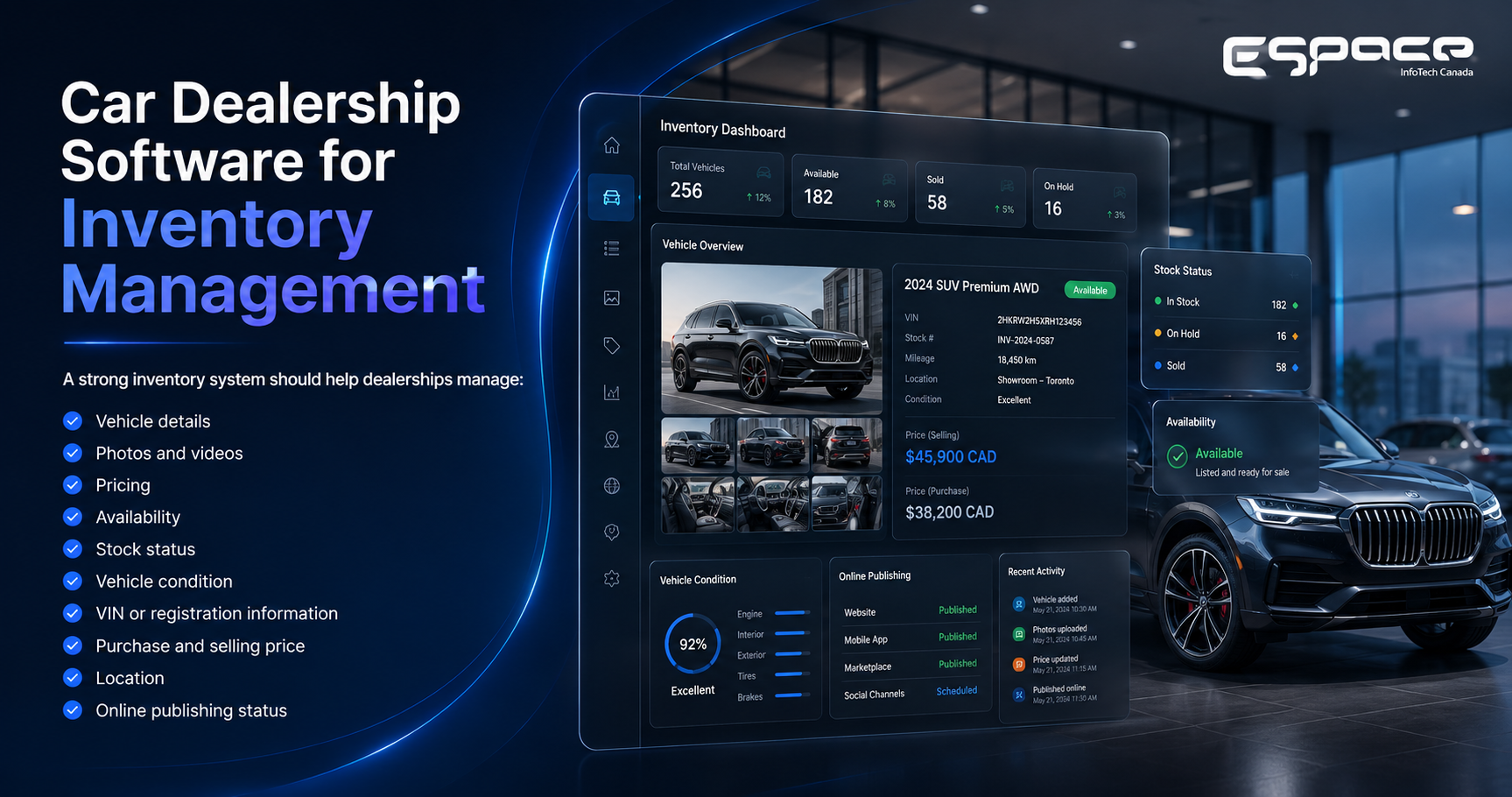
Inventory is the heart of any dealership. If vehicle information is outdated or incomplete, customers may lose trust before they even contact the sales team. A strong inventory system should help dealerships manage:
With real-time inventory updates, sales teams can quickly know which vehicles are available, reserved, sold, or under review.
This reduces confusion and improves customer communication.
A dealership CRM helps teams manage leads, customers, inquiries, follow-ups, appointments, and communication history.
When a customer asks about a vehicle, the CRM should store the inquiry, connect it with the vehicle, assign it to a salesperson, and create a follow-up task. This helps dealerships avoid missed opportunities.
A good car dealership software CRM should include:
The CRM should help sales teams understand who the customer is, what they are interested in, and what action should happen next.
AI can improve car dealership software when it is used to solve real business problems.
Not every lead has the same buying intent. AI can analyze customer behaviour, inquiry frequency, vehicle interest, budget range, and engagement history to identify high-priority leads.
This helps sales teams focus on serious buyers first.
AI can recommend vehicles based on customer preferences, budget, body type, mileage, brand interest, and browsing behaviour.
This creates a more personalized buying experience and helps customers find relevant options faster.
An AI chatbot can answer common questions about vehicle availability, pricing, financing options, test drive booking, dealership hours, and trade-in process.
This reduces repetitive support pressure and helps customers get faster responses.
AI can summarize lead activity, highlight inactive deals, suggest next follow-ups, and identify which vehicles are getting the most interest.
This helps managers and sales teams make better decisions.
Instead of only showing charts, AI can explain business performance in simple language. For example, it can highlight slow-moving inventory, high-performing sales channels, or repeated customer questions.
Automation helps dealerships reduce repetitive manual work.
Useful automation features may include:
Automation does not replace the sales team. It helps them stay organized and act faster.
A dealership dashboard gives managers real-time visibility into business performance.
Important reports may include:
With clear reporting, managers can understand what is working, what needs attention, and where the dealership can improve.

An all-in-one platform gives dealerships better control over sales, inventory, and customer experience.
Key benefits include:
When CRM, inventory, AI, and automation work together, the dealership becomes easier to manage.
Every dealership works differently. A used car dealership, franchise dealership, automotive marketplace, and dealer network may not need the same workflow. Ready-made tools may cover basic needs, but custom car dealership software gives more flexibility.
A custom platform can be designed around your sales process, inventory structure, customer journey, reporting needs, integrations, and business goals. This makes the system easier to adopt and more useful for daily operations.
The future of car dealerships is connected, automated, and data-driven. Dealerships need more than a basic inventory list or simple CRM. They need one platform where inventory, customers, sales teams, AI, automation, and reporting work together. With the right car dealership software, businesses can reduce manual work, improve lead management, create better customer experiences, and make faster decisions.
Ready to build a smarter dealership platform? Espace Infotech Canada Inc. can help you develop custom car dealership software with CRM, inventory, AI, automation, and reporting in one connected system.
Car dealership software is a digital platform that helps dealerships manage vehicle inventory, leads, customers, sales deals, tasks, reports, and automation from one system.
Automotive CRM software helps dealerships manage customer inquiries, follow-ups, appointments, lead sources, communication history, and sales pipeline activity.
AI can help with lead scoring, vehicle recommendations, chatbot support, sales insights, reporting, and customer communication.
A dealership platform should include inventory management, CRM, lead tracking, sales pipeline, test drive scheduling, customer communication, automation, and reporting dashboards.
Yes. Espace Infotech Canada Inc. can build custom dealership software with CRM, inventory management, AI, automation, customer portals, and reporting dashboards.