

What Are the Top-Rated Self-Improvement Apps for Daily Use?
What Are the Top-Rated Self-Improvement Apps for Daily Use?
Self-improvement can mean different things to different people. For one person, it may mean building better habits. For another, it could mean managing stress, becoming more productive, learning something new, or making time for reflection.
That is why there is no single app that is automatically the best for everyone.
The most useful self-improvement apps for daily use are usually the ones that make a specific behaviour easier to maintain. Some focus on mindfulness, while others are built around habits, journaling, productivity, learning, or personal routines.
The better question is not simply “Which app is the best?”
It is: “Which app fits the part of my daily life I actually want to improve?”
What Are the Best Self-Improvement Apps for Daily Use?
Different apps solve different problems. Some of the better-known options include:
| App | Convient le mieux à | Typical Daily Use |
|---|---|---|
| Headspace | Meditation and mindfulness | Guided meditation and focus |
| Calm | Sleep and relaxation | Meditation, sleep content and relaxation |
| Fabulous | Daily routines | Guided routines and habit building |
| Habitica | Gamified habits | Goals, tasks and rewards |
| Day One | Journaling | Daily reflection and writing |
| Forest | Priorité | Distraction-free focus sessions |
| Duolingo | Learning | Short daily lessons |
| Todoist | Productivity | Tasks, planning and routines |
These apps approach personal development differently. Recent comparisons also tend to evaluate them by specific use cases rather than treating self-improvement as one single category.
Headspace: Best for Mindfulness and Meditation
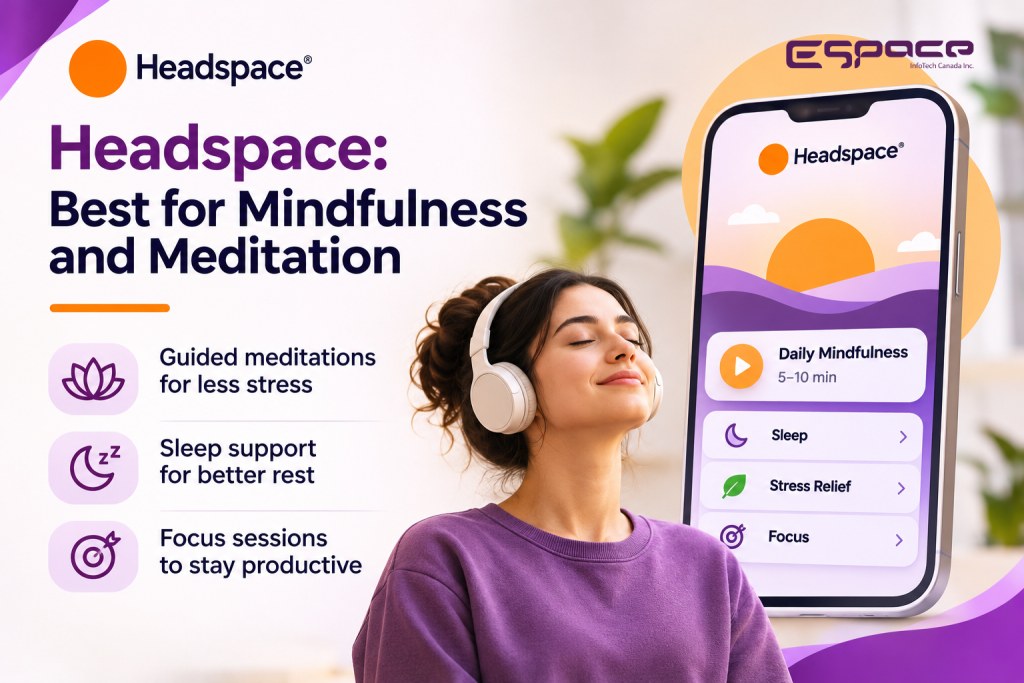
Headspace is designed around meditation and mindfulness, making it useful for people who want to introduce short guided sessions into their daily routine.
Rather than asking users to figure out a meditation technique themselves, guided sessions provide structure around activities such as focused attention, visualization, body scans, and reflection.
Best for: Meditation, mindfulness, relaxation and focus.
Calm: Best for Sleep and Relaxation
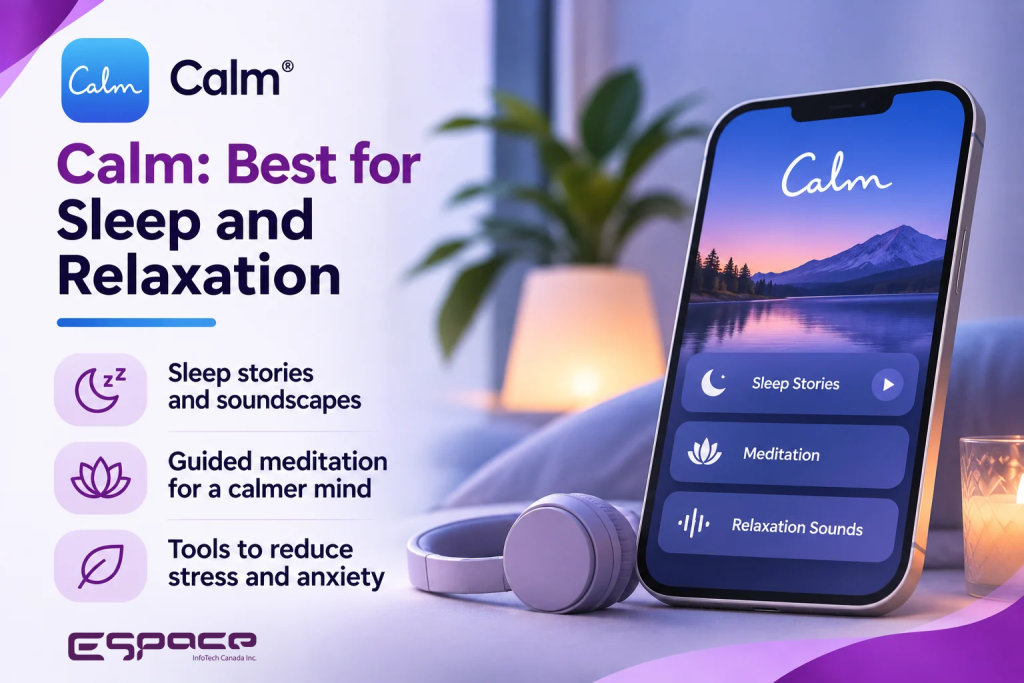
Calm takes a broader approach to mental wellbeing, with content around meditation, sleep, relaxation and mindfulness.
For daily users, this type of app can fit into different parts of the day. A short meditation may work in the morning, while sleep-focused content can become part of an evening routine.
Best for: Sleep, relaxation, mindfulness and stress management.
Fabulous: Best for Building Daily Routines
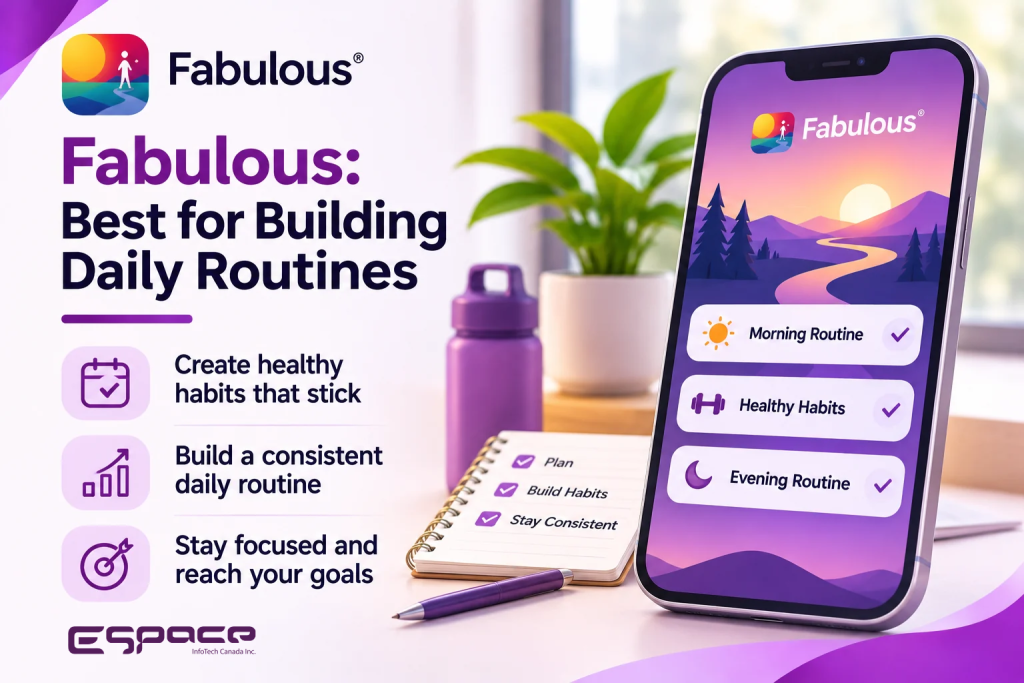
Fabulous focuses on routines and behaviour rather than one particular activity. Users can create morning, afternoon and evening routines and gradually introduce habits into their daily schedule. This approach is useful for people who need more structure than a simple checklist can provide.
Best for: Daily routines, habit building and personal structure.
Habitica: Best for Gamified Self-Improvement
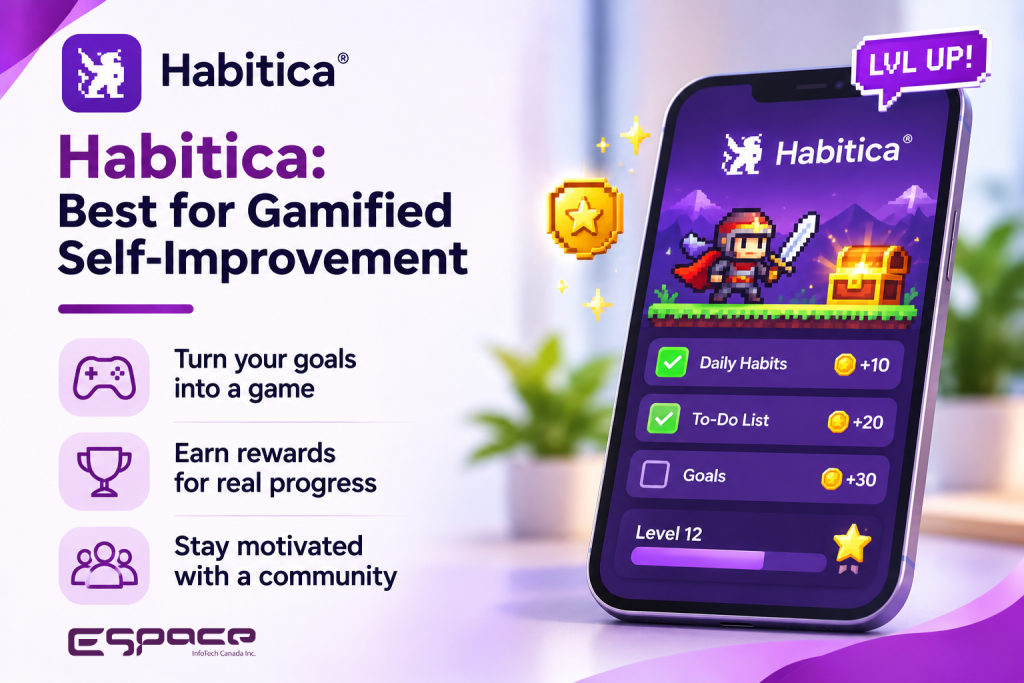
Not everyone enjoys traditional habit trackers. Habitica takes a different approach by turning tasks and habits into a role-playing game. Completing activities can contribute to progress within the app, giving users a more interactive reason to keep going.
Best for: Habit tracking, goals and users who enjoy gamification.
Day One: Best for Journaling and Reflection
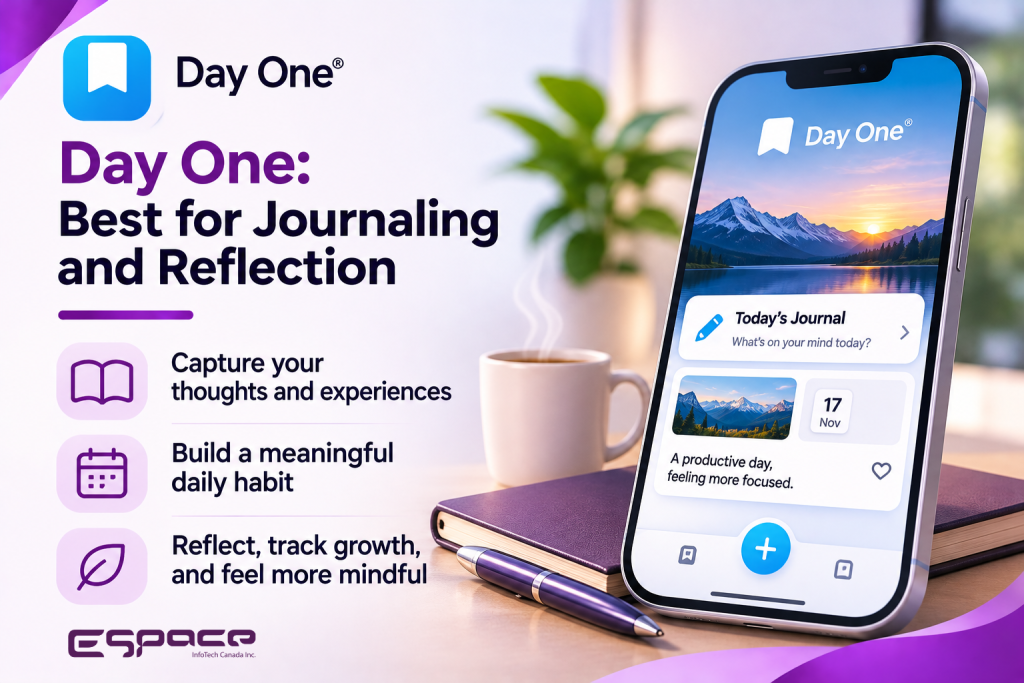
Journaling can be valuable, but opening a completely blank page every day can also make it difficult to stay consistent.
Day One uses features such as prompts, reminders and journaling tools to make regular reflection easier. Its newer AI capabilities also demonstrate how personal reflection apps are beginning to incorporate more personalized digital assistance.
Best for: Journaling, reflection and personal record keeping.
Forest: Best for Focus
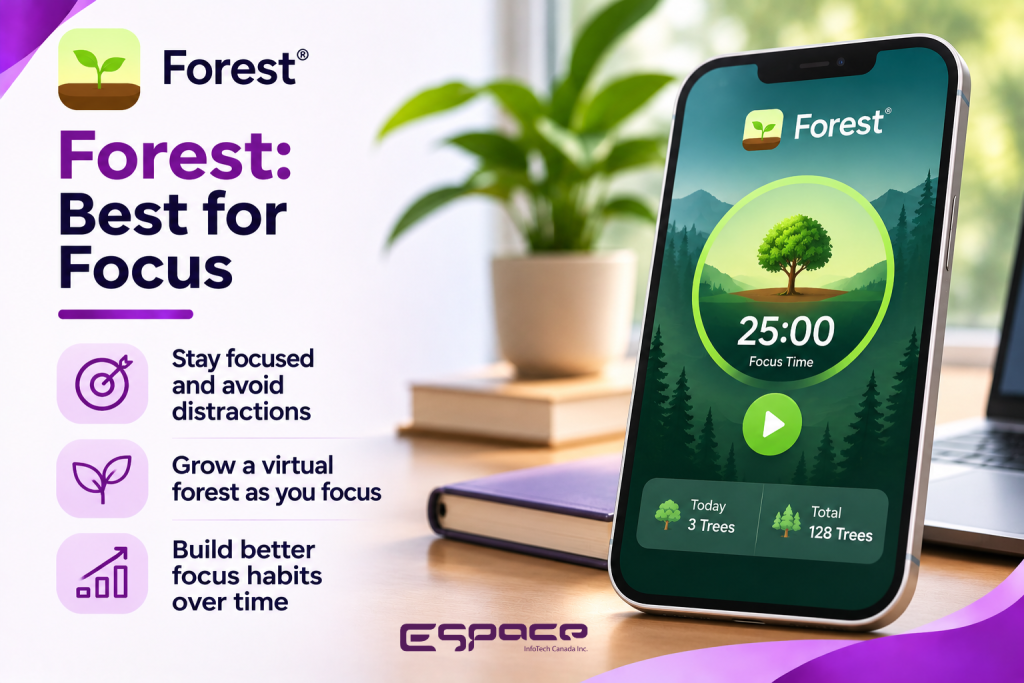
Self-improvement is not always about adding another activity. Sometimes it is about spending less time distracted. Forest uses focused sessions to encourage users to put their phones aside and concentrate on a task. The simple visual approach makes progress easier to see without requiring a complicated productivity system.
Best for: Studying, focused work and reducing distractions.
Duolingo: Best for Daily Learning
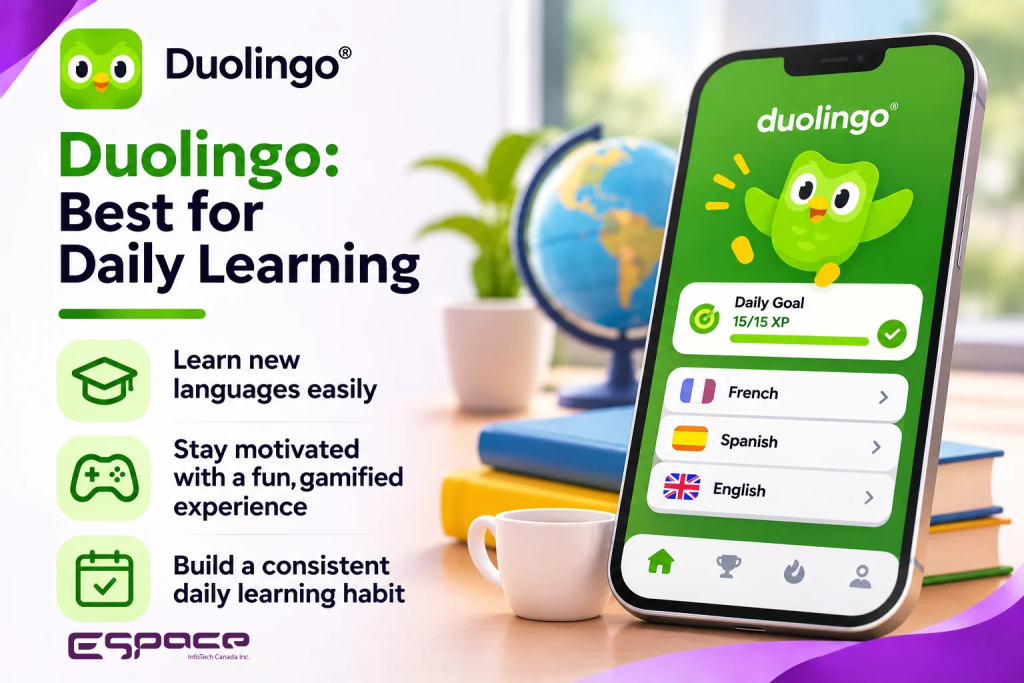
Personal development does not have to focus only on habits or wellbeing. Learning a new language can also become part of a daily self-improvement routine. Duolingo uses short lessons and game-like elements to encourage consistent practice, making it easier for users to fit learning into a busy day.
Best for: Language learning and daily skill development.
Todoist: Best for Personal Productivity
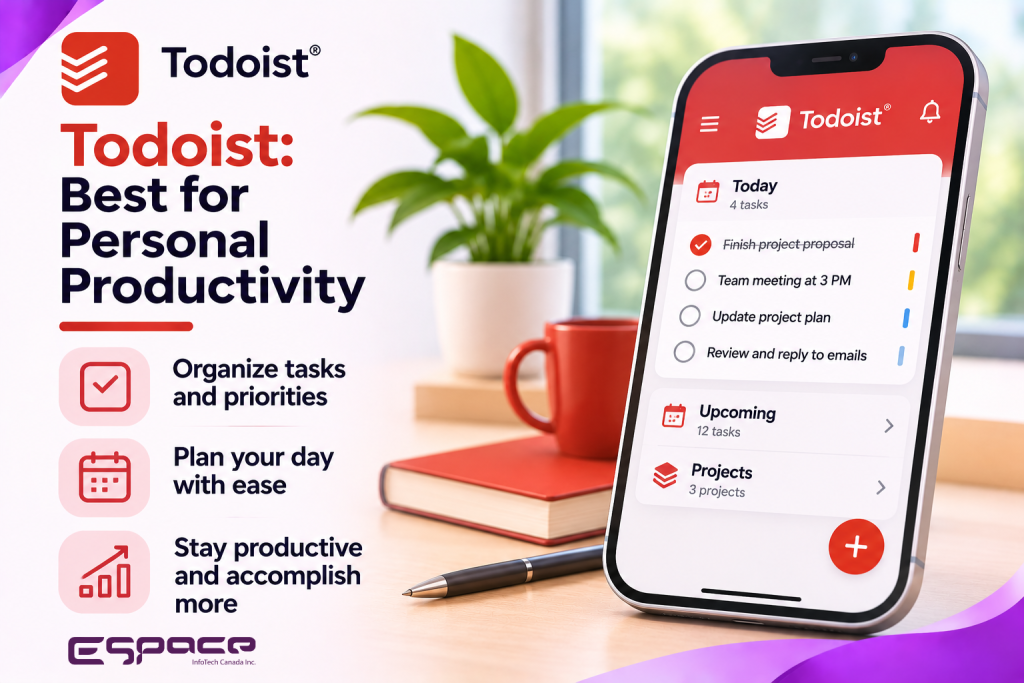
For some people, improving their daily life starts with getting organized. Todoist is designed around tasks, projects, reminders and recurring activities. It can be useful for people who want to bring personal goals, work tasks and routines into one planning system.
Best for: Productivity, planning and task management.
Nirapotta App: A Healthcare-Focused Mobile Solution
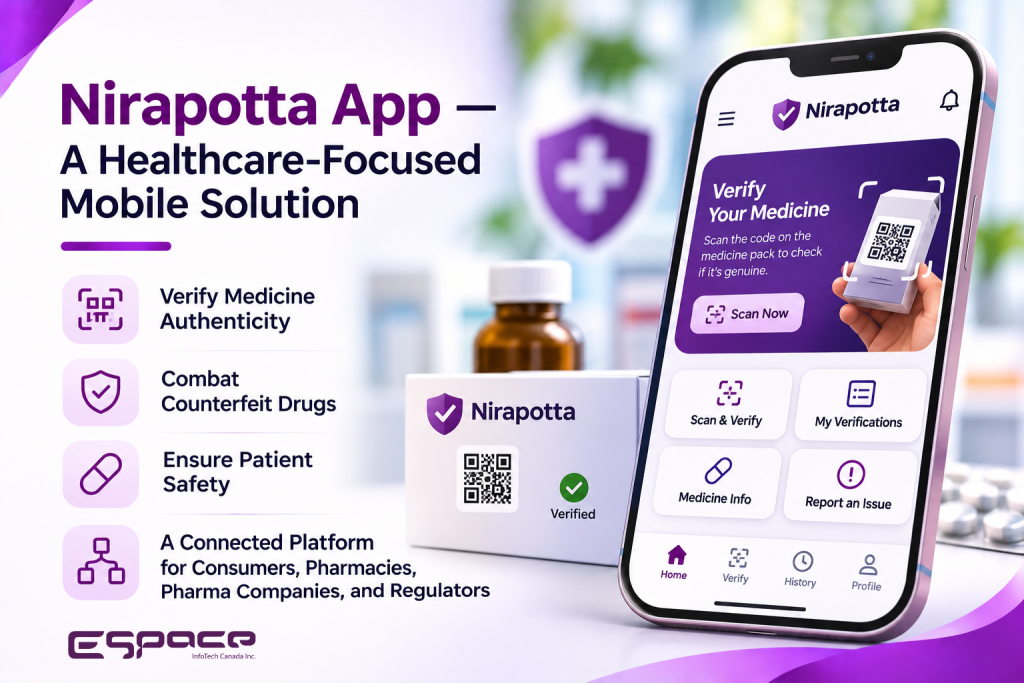
Nirapotta is an Espace InfoTech healthcare application focused on medicine authenticity and safety. Rather than being a self-improvement or habit-tracking app, Nirapotta demonstrates a different side of mobile product development: building a platform around a real public-health problem and connecting different stakeholders through one digital system.
Best for: The solution includes different user perspectives, including:
- Consumers looking for medicine-related information and authenticity support
- Pharmacies managing relevant information and activities
- Pharmaceutical administrators managing product-related data
- Regulatory stakeholders supporting oversight and verification workflows
What Features Make a Self-Improvement App Useful?
A successful self-improvement app does not necessarily need dozens of features.
The more important question is whether the product makes the desired behaviour easier to repeat.
Useful features can include:
- Personalized goals
- Habit tracking
- Mood tracking
- Journaling
- Guided activities
- Reminders
- Progress dashboards
- Streaks and milestones
- Personalized recommendations
- Gamification
- AI-assisted support
- Calendar integration
- Wearable integrations
- Cross-device synchronization
The experience matters as much as the feature list.
A reminder that brings someone back to a useful activity can be valuable. Too many notifications can have the opposite effect.
How Is AI Changing Self-Improvement Apps?
AI is making personal development applications more adaptable.
Instead of presenting every user with exactly the same content, an AI-enabled application can potentially personalize recommendations based on goals, preferences and previous interactions.
For example, an AI-powered app could:
- Generate personalized journaling prompts
- Recommend activities based on user goals
- Create a daily improvement plan
- Adjust recommendations based on previous behaviour
- Summarize journal entries
- Support conversational reflection
- Personalize learning content
- Identify patterns in user activity
This does not mean every self-improvement app needs AI.
AI should have a clear purpose. If a simple rule-based recommendation works, there may be no reason to make the system unnecessarily complex.
For applications dealing with emotional wellbeing or personal information, privacy, security and responsible AI design also need to be considered from the beginning.
What About Healthcare and Wellbeing Apps?
Not every app that supports a healthier or safer lifestyle should be classified as a self-improvement app. Healthcare applications solve different problems and may involve more complex workflows, user roles, data requirements and security considerations. This is also an area where Espace InfoTech has relevant project experience.
Nirapotta App — A Healthcare-Focused Mobile Solution
Nirapotta is an Espace InfoTech healthcare application focused on medicine authenticity and safety.
Rather than being a self-improvement or habit-tracking app, Nirapotta demonstrates a different side of mobile product development: building a platform around a real public-health problem and connecting different stakeholders through one digital system.
The solution includes different user perspectives, including:
- Consumers looking for medicine-related information and authenticity support
- Pharmacies managing relevant information and activities
- Pharmaceutical administrators managing product-related data
- Regulatory stakeholders supporting oversight and verification workflows
This type of project shows why healthcare mobile applications require more than attractive interfaces. They need thoughtful user roles, structured data, appropriate workflows, secure access, reliable backend systems and a clear understanding of the problem the application is solving.
For Espace InfoTech Canada Inc., the lesson is simple: The best mobile application is not necessarily the one with the most features. It is the one that solves the right problem for the right users.
What Makes a Good Self-Improvement App?
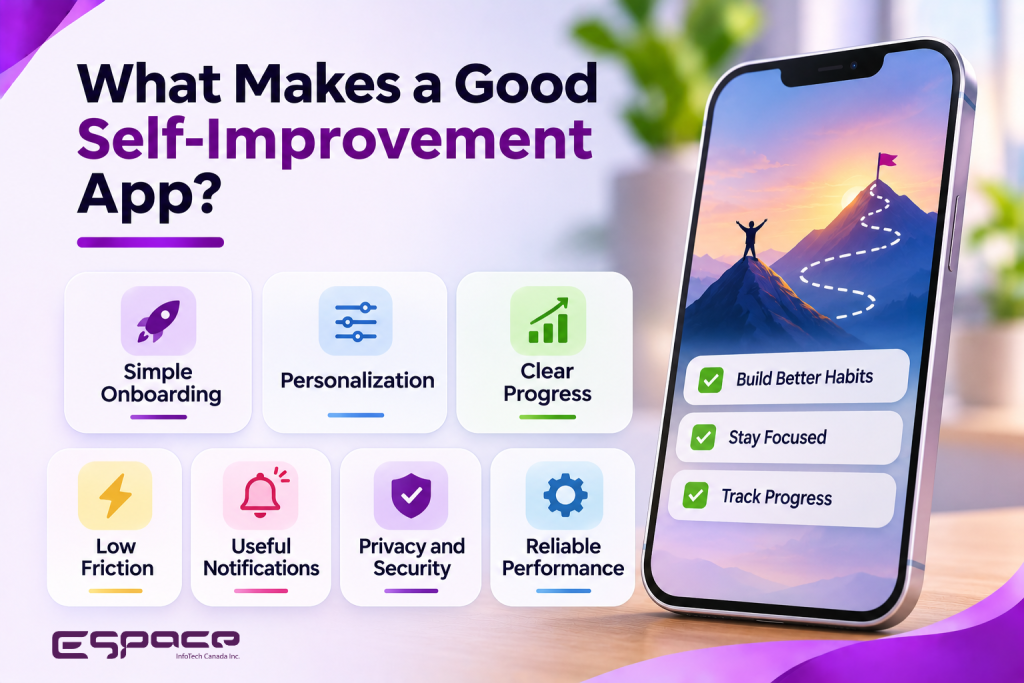
From a product development perspective, a good self-improvement app should make the desired behaviour easier to start and easier to repeat.
Simple Onboarding
Users should understand the purpose of the application quickly.
Personalization
Different users have different goals. The experience should be able to accommodate those differences.
Clear Progress
Users should be able to see whether they are making progress.
Low Friction
Daily activities should not require unnecessary steps.
Useful Notifications
Notifications should support the user’s routine rather than become another distraction.
Privacy and Security
Apps dealing with journals, moods, habits, wellbeing or personal goals can collect sensitive information. Privacy and security should therefore be considered throughout the product architecture.
Reliable Performance
A great idea can still fail if the application is slow, confusing or unreliable.
C'est ici qu'entrent UI/UX design, mobile development, backend architecture, API integration, AI, and QA come together.
Could You Build Your Own Self-Improvement or Wellbeing App?
Yes. An existing application may be enough for personal use, but organizations sometimes need a product designed for a specific audience or business model.
A custom application could focus on:
- Emotional wellbeing
- Habit formation
- Personal productivity
- Employee wellness
- Journaling
- Fitness routines
- Learning
- Goal tracking
- AI-assisted coaching
- Healthcare support
Depending on the product, it could include personalized dashboards, AI recommendations, notifications, subscriptions, analytics, wearable integrations, secure accounts and administrative tools. Espace InfoTech Canada Inc. develops custom mobile applications around specific user journeys, business requirements, backend systems, APIs and long-term scalability.
How Espace InfoTech Approaches Mobile App Development
Building a mobile application is more than designing screens.
A successful product needs to connect:
User Experience → Mobile App → Backend → APIs → Database → Integrations → Analytics
Espace InfoTech works across mobile development, custom software, UI/UX, AI, API integration and quality assurance.
Our healthcare work, including Nirapotta, is one example of how the team can build technology around a specific user problem and multiple stakeholder requirements.
If you are planning a self-improvement, wellness, healthcare or personal development application, speak with the Espace InfoTech Canada Inc. technology team about the product requirements.
You can also explore Espace InfoTech Canada Inc.’s custom software development capabilities when the application requires a more complex backend or business platform.
Conclusion
The best self-improvement app is not necessarily the one with the highest rating or the longest feature list.
It is the one that fits the behaviour a user actually wants to improve.
For some people, that may mean meditation with Headspace or Calm. For others, it could mean building routines with Fabulous, tracking habits with Habitica, journaling with Day One, learning with Duolingo, or organizing the day with Todoist.
For businesses developing their own digital products, the bigger lesson is about product-market fit.
A useful app should make positive behaviour easier to start, easier to repeat and easier to understand.
And when the product moves into healthcare or wellbeing, the requirements become broader.
Projects such as Nirapotta show how a mobile application can be designed around a real healthcare problem while supporting different users and operational workflows.
Whether the goal is personal development, wellbeing, healthcare, productivity or another specialized use case, successful mobile products start with a clear problem and build the technology around it.
Discuss your mobile app or digital product idea with Espace InfoTech.
FAQ
What are the top-rated self-improvement apps for daily use?
There is no universal number-one app because self-improvement covers different goals. Apps such as Headspace, Calm, Fabulous, Habitica, Day One, Forest, Duolingo and Todoist each focus on different areas of personal development.
Which app is best for building daily habits?
Fabulous and Habitica are useful options for people who want to build habits. Fabulous focuses more on routines, while Habitica uses gamification to make habit tracking more engaging.
Which app is best for journaling?
Day One is a popular option for digital journaling and reflection, particularly for users who want prompts, reminders and structured journal entries.
Are self-improvement apps worth using?
They can be useful when they support a specific behaviour consistently. The application itself does not create the improvement; the value comes from using the right tool regularly.
Can AI be added to a self-improvement app?
Yes. AI can support personalized recommendations, journaling prompts, conversational experiences, summaries, adaptive learning and other features. Privacy, security and responsible AI design should be considered before implementing these features.
Can a healthcare app use similar self-improvement features?
Yes, but healthcare applications require a different product strategy. Features such as personalization, notifications, dashboards and AI may be useful, but healthcare workflows, data protection, user roles and regulatory considerations need additional attention.