1. Intelligent Workflow Automation
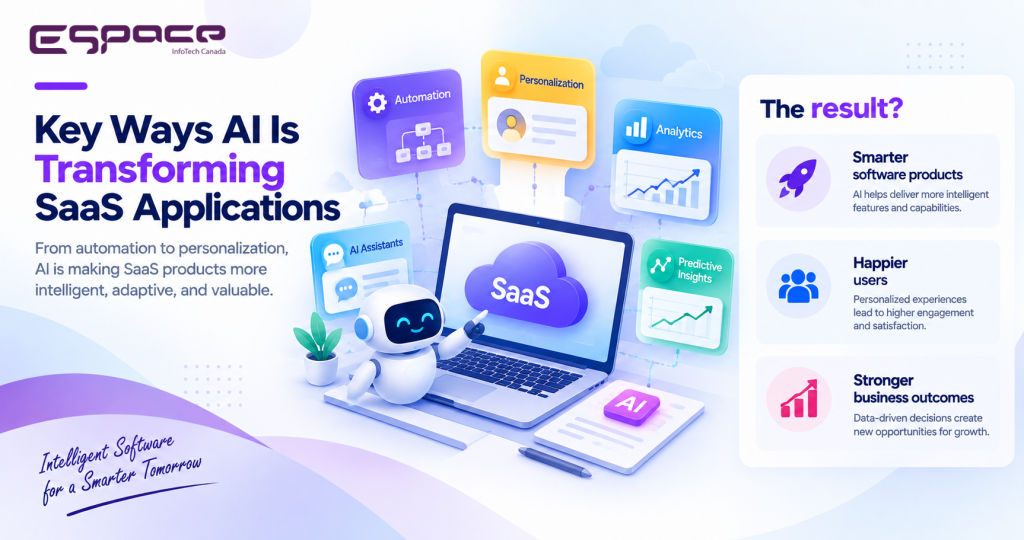
One of the biggest advantages of AI in SaaS is automation.
Many businesses still spend significant time on repetitive tasks such as data entry, reporting, document processing, customer responses, and approval workflows.
AI-powered SaaS platforms can automate these processes by understanding patterns and triggering actions automatically.
Examples include:
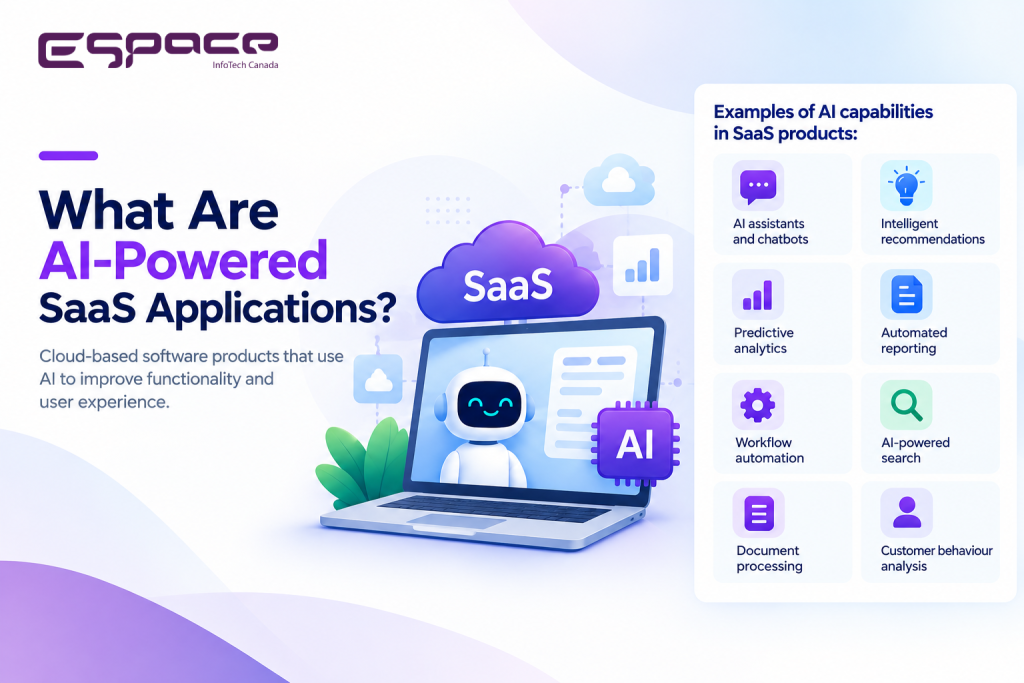
- Automated invoice processing
- AI-generated reports
- Smart task recommendations
- Automated customer responses
- Workflow optimization
This allows teams to focus on higher-value activities.
2. Personalized User Experiences
Modern users expect software experiences that match their needs.
AI can analyze user behaviour, preferences, previous actions, and business requirements to create personalized experiences.
For example:
A CRM platform can recommend the next best sales action.
An analytics platform can highlight important trends.
A project management tool can suggest workflow improvements.
Personalization helps increase engagement and improves the overall user experience.
3. AI-Powered Analytics and Insights
Most SaaS platforms collect large amounts of data, but businesses often struggle to understand what that data means.
AI can transform raw information into actionable insights.
AI-powered analytics can help businesses identify:
- Customer behaviour patterns
- Sales opportunities
- Performance trends
- Operational issues
- Business risks
Instead of only showing dashboards, AI can explain what is happening and suggest possible actions.
4. AI Assistants and Conversational Interfaces
AI assistants are becoming common in SaaS products.
They help users complete tasks faster by allowing them to interact with software through natural language.
Examples include:
- Asking questions about business data
- Creating reports
- Finding information
- Managing tasks
- Getting product support
This creates a simpler and more user-friendly experience.
5. Predictive Decision-Making
AI can help SaaS platforms move from reactive systems to proactive systems.
By analyzing historical and real-time data, AI can predict future outcomes.
Examples include:
- Predicting customer churn
- Forecasting sales demand
- Identifying potential risks
- Recommending business actions
Predictive capabilities help businesses make decisions before problems happen.